How to sow dancing grass? Detailed sowing method
Dancing grass, a plant that looks like grass but is not grass, usually grows to a height of about 60 cm. When a potted seedling grows to more than 25 cm and three leaves emerge from the leaf stalk, it can often be enjoyed. Because it is sensitive to light, temperature and sound waves, it often sways as if dancing, making it quite ornamental.
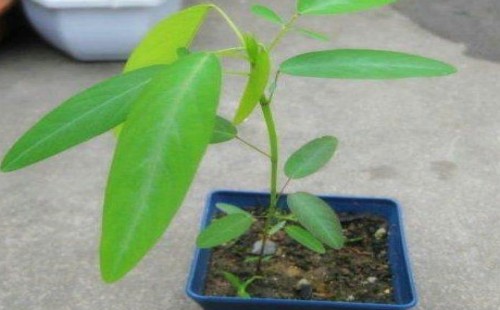
Because dancing grass moves in a very magical way, many gardening friends like to grow this peculiar plant in pots for ornamental purposes. Dancing grass can be propagated by sowing seeds, and when the young plants reach a certain height, they are transplanted into pots and grown as potted plants. So, how do you sow dancing grass? Below, the editor will share with you the sowing method for dancing grass.
I. Seed treatment
Because the seeds of dancing grass are relatively hard and the outer layer is wrapped in a waxy substance. If the seeds are sown directly without treatment, it usually takes several months for germination to occur. Therefore, in order to increase the germination rate and shorten the germination time, warm water soaking treatment is usually required.
First use dry sand to rub off the waxy substance wrapped around the outer layer of the seeds, then put them into 38°C warm water and soak them for more than a day. When the seeds have fully absorbed water and swollen, take them out, wrap them in gauze and place them in a warm and moist place. After drying off excess moisture, they can be sown and propagated.
II. Sowing process
Dancing grass can be sown throughout the year, as long as the temperature conditions are met. The most suitable temperature for seed germination is between 20°C-28°C. But generally, sowing during March to June gives the highest germination rate. After preparing the flower pot and culture soil, scatter the seeds on the culture soil, then cover with a layer of fine soil 2-3 cm thick and spray the soil with water to moisten it. Finally, place the flower pot in a dark and ventilated place for care.
In order to create conditions suitable for seed germination, you can use a glass sheet or plastic film to cover the mouth of the flower pot to reduce excessive water evaporation. At the same time, be careful to open the cover every day to allow air exchange inside and outside the pot for 15-20 minutes. If all goes well, germination can usually occur smoothly after about 1 week.
III. Seedling management
When the seeds break through the shell, germinate and produce a pair of relatively symmetrical leaves, we should promptly remove the glass sheet or plastic film covering the mouth of the flower pot, then move the flower pot to a sunny place where it can receive scattered light, avoiding direct sunlight. At the same time, appropriately control watering to avoid the potting soil being too wet and affecting the growth of the seedlings. When the seedlings grow to a height of 3-5 cm, they can be divided and transplanted.
IV. Potting and planting
Select relatively robust seedlings from the original pot and transplant them separately into different flower pots. Generally, transplant them with soil, as this is more conducive to adapting to the pot and resuming normal growth. If the selected flower pot is relatively large, you can plant 2-3 seedlings in one pot. After completing potting and planting, gently compact the soil around the potted seedlings, then water thoroughly once, and place the flower pot in a cool and ventilated place for the seedlings to recover. After the seedlings have fully adapted to the pot, normal care and management can be resumed.