How to Graft an Avocado Tree? Detailed Explanation of Grafting Methods and Key Technical Points
Avocado is not only rich in nutrients but also has outstanding health benefits. More importantly, besides being planted in the ground, it can also be grown in containers. However, if you want the avocado to flower and fruit smoothly while improving fruit quality, it is generally recommended to graft it to improve the variety. So, how do you graft an avocado?
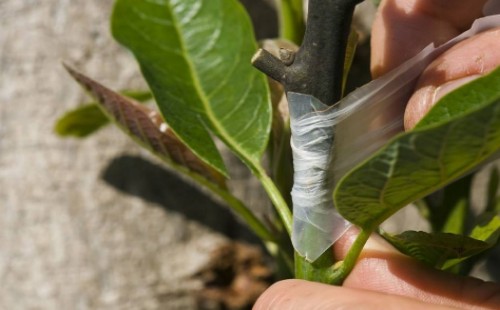
Many fruits can be propagated and grown from leftover seeds or pits, and then cultivated in containers. But most varieties of fruit trees are not so easy to flower and fruit once they grow up, and even if they do flower and fruit, the yield and quality of the fruit are relatively low. The same is true for avocado. Generally, during the process of growing seedlings in containers, they need to be grafted in a timely manner, as this is the only way to improve fruit yield and quality. Today, the editor will share with you the grafting methods for avocado.
First, we need to obtain container-grown avocado seedlings, which can be propagated by sowing the pits. The seedlings we obtain are mainly used as rootstock during grafting, and the grafting methods can include bud grafting, cut grafting, side grafting, or even pit grafting.
During grafting, the most commonly used method is bud grafting, which is not only suitable for avocado seedlings but also for mature trees and large trees. Moreover, as long as the temperature is suitable and it is not the rainy season, avocado grafting can generally be done all year round. But usually, the two time points of early spring and late autumn give the best results.
The editor will use autumn bud grafting as an example to explain. If autumn bud grafting goes smoothly, it can survive in the same year, and the sprouting and growth of the buds are relatively good. However, when winter temperatures are too low, timely warmth and cold protection measures should be taken to prevent the tender grafted seedlings from frost damage. But considering temperature reasons, in regions with relatively cold temperatures, bud grafting is generally carried out in early spring.
But regardless of which period bud grafting is carried out in, we need to ensure that the sap flow of the seedling is smooth and that the bark is relatively easy to peel off, because when bud grafting is done under such conditions, the grafted seedlings are more likely to survive and grow better. When performing bud grafting, a "T" shape shield is mostly used, and the length of the shield-shaped bud cut is preferably about 3 cm. The thickness of the branch at the grafting site of the avocado used as rootstock should preferably be maintained at about 1-1.5 cm, at a height of about 20 cm from the ground. After bud grafting is completed, wrap and tie the grafting site with plastic film, leaving only the small bud exposed.
2-3 weeks after completing the grafting, if it goes smoothly, the grafted seedling has basically survived. At this time, if you untie the binding material, you can find that the grafted seedling has already taken root and may even be sprouting. At this point, the excess part of the rootstock should be cut off in a timely manner, and after another 2-4 weeks or so, all the upper part of the rootstock should be cut off. At the same time, external force is also needed to bring the branch of the grafted seedling as close as possible to the rootstock to determine the growth direction of the grafted seedling.
When the grafted seedling grows to a height of about 50-60 cm, we need to promptly cut back the rootstock at a position about 1 cm above the grafting site. Be careful during the operation to avoid accidentally damaging the grafted seedling, and apply force evenly to ensure the cut remains smooth, which is more conducive to wound healing. If grafting is done by this method, the survival rate can generally reach more than 50%.
Of course, besides bud grafting, for container-grown avocado seedlings, we can also use the cut grafting method. However, the cut grafting method is generally used for relatively tall tree species, and is also suitable for young plants like avocado, mostly carried out in spring. But the scion is required to be a one-year-old branch with more than 2 small buds. If it goes smoothly, the survival rate can reach more than 80%. Compared with bud grafting, this appears to be more advantageous.
In addition, grafting of young avocado trees can also use two methods: side grafting and pit grafting. Since their principles are similar, the editor will not continue to describe them in detail here. But no matter which method is used for grafting, we should follow scientific and standardized procedures. And attention should also be paid to later care and management, as this is the only way to ultimately achieve flowering and fruiting.