How to propagate blue flag iris? A detailed guide to common propagation methods
Blue flag iris has emerald green leaves shaped like swords, and its flowers are very brightly colored; when they bloom in masses, they look like a flock of swallows dancing, beautiful and full of charm, which gives it extremely high ornamental value. People often plant this flowering plant in gardens, by park lakesides, and near shallow water areas beside ponds and rivers, where it can be enjoyed both for its flowers and its foliage, making it a highly ornamental aquatic plant. However, when grown as a potted plant and placed indoors, it often looks even fresher and more elegant. So, how is blue flag iris propagated?
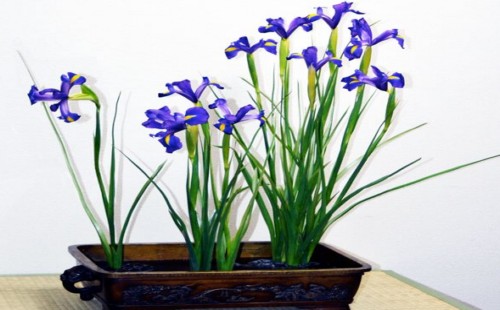
For potted blue flag iris, young plants can be obtained through sowing and division. When propagating blue flag iris seedlings by sowing, the seeds can be harvested as soon as they mature and sown immediately; of course, they can also be dried and sown in the same year from August to October in autumn, or sown anytime from January to April the following spring. Blue flag iris seeds sown in spring generally bloom in the same year.
However, because different regions also differ somewhat in climate and environment, the specific sowing time often varies. Everyone can flexibly choose the sowing time according to their own geographical location. But no matter when it is sown and propagated, the most critical condition of temperature must be met. Moreover, to increase the germination rate, the seeds usually need to be pre-treated for germination before sowing.
Before sowing, blue flag iris seeds generally need to be soaked in warm water for a full day. After the seeds have fully absorbed water and swelled, they are sown, while ensuring the ambient temperature stays at 18°C-21°C, which is more suitable for germination. As long as all conditions are met, they will generally germinate and emerge smoothly in 2-3 weeks.
Compared with propagation by sowing, division propagation is generally carried out in spring and autumn, and can also be done after flowering. When dividing, first dig out all the rhizomes of the mother plant, then shake off the excess soil, and use a sharp blade to cut the rhizomes at suitable positions, taking care to ensure that each piece of rhizome has a bud eye, which is the key to ensuring the division seedlings sprout. And when planting the rhizomes, make sure the bud eyes are exposed above the soil surface, with all other parts buried in the soil.
To increase the fertility of the soil, it is recommended to apply sufficient base fertilizer to the soil when planting. Since blue flag iris prefers moisture, whether during the growing period or the flowering period, it often needs plenty of water, especially during the flowering period, when sufficient water should be ensured. Of course, during the growing period it can be fertilized 3-4 times, while also taking care to remove weeds from the soil and the withered yellow branches and leaves grown by the plant. In the hot summer season, it generally needs more spraying to maintain moisture and lower the temperature, ensuring the plant has green leaves and strong stems.