How Often Should You Change the Water for Hydroponic Plants? A Detailed Guide to Water Change Frequency
In the care and management of hydroponic plants, the most frequently used practice is changing the water, just like repotting soil-grown plants, this is an essential step. However, compared with repotting, the frequency of water changes tends to be much higher. So, how often should you change the water for hydroponic plants? To answer this question, let us first understand why hydroponic plants need frequent water changes.
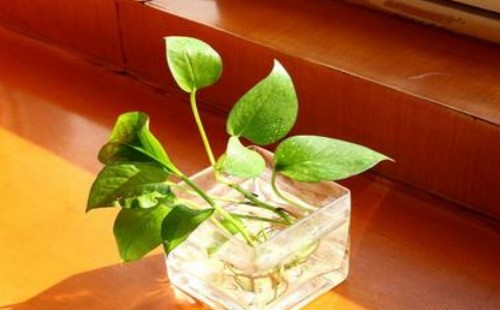
For hydroponic plants, changing the water is the most important task, because if the water is not changed for a long time, on the one hand, the oxygen content in the water will become lower and lower; on the other hand, while carrying out growth activities, the plant also releases some substances into the water that affect growth, and the water quality is also prone to change. Whether the oxygen content becomes low or the water quality becomes polluted, this is very unfavorable to the growth of hydroponic plants, and may even cause various symptoms of poor growth.
It can be seen that changing the water is of great significance to hydroponic plants, so we need to do the water-changing work at the right time. Under normal circumstances, a water change cycle of 3-7 days is relatively suitable for hydroponic plants. The specific frequency of water changes mainly depends on various factors such as the current season and the growth state of the plant. For plants that have just started hydroponic growing, generally a water change every 1-2 days is needed, especially in summer when the temperature is too high and the plant is growing vigorously.
After entering winter, many plants gradually enter a dormant or semi-dormant state as the temperature gradually drops, and water consumption is relatively low, so the water change cycle can be appropriately extended. But in general, a shorter interval between water changes and a higher water change frequency are more beneficial to the growth of the plant.
In addition, besides the water-changing method, the choice of water quality is also very important. The most widely used and relatively better water quality is purified water, because purified water is not only relatively clean, but also has a relatively low salt content, and can usually be used as the first choice of water for hydroponic plants. At the same time, purified water is also very clear and transparent, so when used for hydroponic flowers and plants, you can observe them more thoroughly, and it is environmentally friendly and pollution-free.
However, many people, for convenience, like to use tap water to grow plants hydroponically, and this is also acceptable under certain conditions. Usually, before use, we need to set it aside to stand for 3-4 days so that the chlorine in the tap water can fully volatilize, so that it will not harm the plant when used. If it is a sunny day, you can also place it in the sun to expose it, which can accelerate the volatilization of chlorine in the water.
Each time you change the water, it is recommended to clean the root system once, generally by rinsing the roots, mainly to wash off the mucus or viscous substances attached to the roots, to avoid affecting the root system's ability to absorb, and also to reduce the chance of root rot. At the same time, also rinse off the sediment on the container walls and bottom, to prevent the breeding of germs that infect the plant and affect growth.
However, one point we especially need to pay attention to is the depth of the water each time it is changed, that is, what position is suitable for the water level line to be kept at. For soil-grown plants, water cannot be allowed to accumulate in the pot, otherwise it is easy to cause root rot; and for hydroponic growing, you likewise cannot put too deep water in the container. The recommended practice is to let about 2/3 of the plant's root system be exposed above the water surface, so as to ensure that the root system can smoothly absorb the dissolved oxygen in the water while also absorbing oxygen from the air, making the plant grow more stably.