How to grow a bonsai ficus so it develops aerial roots
Ficus trees have the characteristic of growing aerial roots, and these aerial roots hang down from the branches and trunk like a person's beard, making them very distinctive. Some aerial roots are also very long, and can even hang down to the surface of the pot, looking quite unique. On closer observation, the aerial roots growing from the branches and trunk will, as time goes on, develop dangling fibrous roots, and after a long time they may even form buttress roots, making the trunk and even the roots of the ficus bonsai more ornamental.
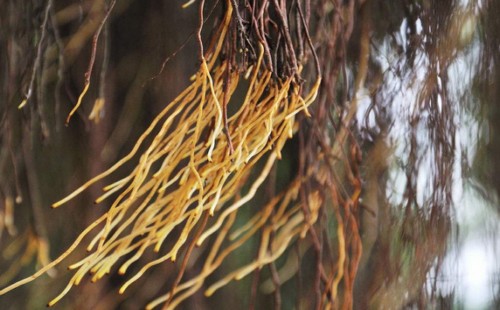
The beauty of fibrous roots is a major characteristic of ficus bonsai, so sometimes we call a ficus bonsai with this feature a fibrous-root ficus. Set off by the green leaves, the fibrous roots sway in the wind, looking truly beautiful. Since the fibrous roots of the ficus can enhance the overall ornamental value of the bonsai, we should focus on cultivating them. This is also one of our strategies for shaping bonsai ficus trees. So, how do you make a ficus bonsai grow fibrous roots?
Actually, cultivating fibrous roots on a ficus bonsai, simply put, means prompting the ficus to grow aerial roots, so this makes it easier to understand. Therefore, the process of cultivating fibrous roots on a ficus is in fact the process of cultivating aerial roots. To make a ficus bonsai grow aerial roots, we can usually adopt the following methods.
1. Approach grafting
The approach grafting method is similar to approach grafting in grafting, but there are also differences. The approach grafting method for producing fibrous roots on a ficus bonsai mainly involves joining a small ficus with abundant roots, together with its pot, onto the branch or trunk of the ficus that you want to grow aerial roots. After the approach grafting succeeds and the growth is stable, we then remove the small ficus's pot and potting soil, and at the same time gently straighten out the small ficus's roots so that they can only grow and spread out.
2. Half-broken branch
First select the side branch or branch stem of the ficus that you want to grow fibrous roots, and use a knife to cut an opening in the part close to the main trunk of the ficus, with the depth preferably just reaching the woody part. Then break it off from the wound, and afterward seal the wound with mud. After some time, a large number of lateral roots will gradually sprout from the broken wound, and then guide these lateral roots to grow downward, thereby achieving the goal of sprouting fibrous roots, giving a visual effect of a single tree forming a forest.
3. Wire binding
First we need to conceive the shape of the bonsai, then according to the shaping needs, select the appropriate branch stem that needs to be prompted to grow aerial roots, and use wire to wrap around the branch stem at the appropriate place and tighten the wire. This is mainly to obstruct the flow of sap within the ficus, and then cover the wound made by the binding with fresh moist moss.
After some time, as the ficus continues to grow, white tender root buds will sprout at the wound where the wire was bound. At this point, we should promptly use a plastic pot to make a removable sleeve for it, and the plastic pot needs to be filled with growing medium, preferably a mixture of fine sand, vermiculite or sawdust. Then these white root buds will grow downward and drill into the growing medium in the plastic pot, using this as a guide, thereby achieving the goal of stimulating aerial roots. When the fibrous roots meet our expectations, remove the removable sleeve.
All three of the above methods can guide a bonsai ficus to smoothly grow aerial roots, but this requires us to understand the ficus's growth habits in advance and create a growing environment suitable for sprouting aerial roots. Have you all mastered them? In your spare time, why not give it a try!