How to shape a sea buckthorn bonsai? A full breakdown of methods and techniques
Sea buckthorn is not only rich in nutrients and highly beneficial for health and wellness, it can also be used as medicine to treat illness, making it a plant that serves as both food and medicine. But its uses do not stop there. For enthusiasts who enjoy working on bonsai, sea buckthorn can even be made into a fruit-viewing bonsai to appreciate. As long as we can shape it perfectly, a sea buckthorn bonsai can often bring people a most delightful enjoyment. So today, the editor will discuss with you the shaping of sea buckthorn tree bonsai.
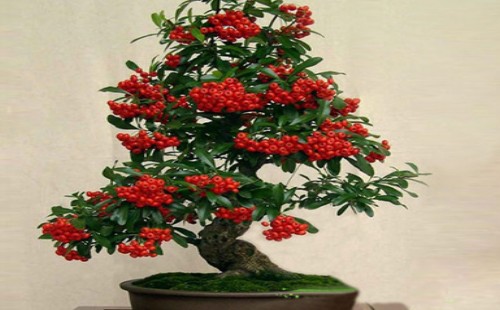
There are quite a few shaping styles for sea buckthorn bonsai, especially in the branch tips, whether coiled, extended at odd angles, or upright, all are forms of expression. The finished bonsai not only has the rugged, aged effect of a gnarled old pine, but also the elegant image of a landscape bonsai, with a soft beauty amid its upright majesty. In the shaping process of sea buckthorn bonsai, pruning methods are usually used to perfect the plant's form. However, pruning and shaping of sea buckthorn is generally done in winter, but if the sea buckthorn is grown in northern regions, it is more suitable to do it in March after the start of spring.
I. Shaping of young trees
For the shaping of young sea buckthorn trees, it can usually be divided into two situations. One is to remove the main trunk and let it present a shrub-like form, mainly to promote the sprouting and growth of side branches. However, in the first few years, the main focus is on cutting off dead branches and branches that affect the beauty of the plant's form, keeping the plant's original appearance as much as possible.
In the second situation, the sea buckthorn tree needs to be pruned into a shape that highlights the main trunk, and at this stage its side branches are generally cut off. Pruning and shaping in this way is mainly carried out when the soil is relatively poor. After all, the soil environment has fewer nutrients, and since it is grown as a potted plant, cutting off side branches allows nutrients to be more concentrated in the main trunk, ensuring the trunk can grow more robustly and improving its own resistance and vitality.
II. Shaping of mature trees
For the shaping and pruning of mature sea buckthorn trees, it is mainly done in spring. Before spring pruning, make sure the sea buckthorn already has the ability to grow completely independently. For the pruning and shaping of mature trees, the main task is to cut off overlong branches, drooping branches, dead branches, and other such branches. The main purpose during this period is to make the crown more stable, and the shaping style can be chosen according to the plant's tolerance and personal preference. It can be made into a trunk-style bonsai, a shrub-style bonsai, or a flowing-branch style effect, all are possible.
However, in order to make it easier for us to design and create the shape, we also need to treat the branches by pinching and topping, so that the shaping effect better matches our aesthetic. But overall, the pruning and shaping of sea buckthorn bonsai should not be excessive. Although its root system is well developed, its vitality is tenacious, and its sprouting ability is strong, it is often limited by the soil, and its branches and leaves will not be very lush. So generally there is no need for large-scale shaping and pruning treatment, as long as it can achieve our shaping purpose.
In addition, the lifespan of sea buckthorn is often affected by the regional environment, and the length of its lifespan can even vary greatly. But after all, sea buckthorn is a tree species quite suitable for fruit viewing, and making it into a bonsai to appreciate, besides doing proper daily care and management work, we also need to prune appropriately to perfect the plant's form, so that it has both a beautiful form and is suitable for fruit viewing.