How to water bonsai in summer? You need to master the right method
After summer arrives, because the weather is hot and the temperature is quite high, especially in midsummer, the care and management of bonsai also enters a critical period. This is mainly because summer's light and temperature are too high, water evaporates in large amounts, and watering itself is a daily task. Under such conditions, replenishing water must be timely, especially for bonsai plants with poor drought tolerance, which should have water replenishment measures taken even more carefully. So, how do you water bonsai in summer?
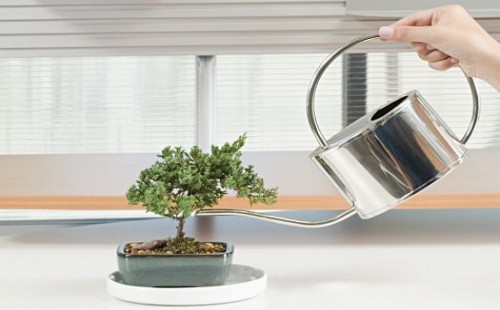
Because summer's hot weather environment usually exceeds the physiological temperature tolerance of bonsai plants, and bonsai plants often need to evaporate water to lower their own temperature. But in this process, if bonsai plants often need to absorb large amounts of water to maintain this balance, once this balance is broken, the plants will show various adverse symptoms. To avoid this situation, we need to replenish water for bonsai plants in a timely manner, but water replenishment usually requires mastering the key points in four aspects:
1. Ensure water quality
For watering bonsai plants, rainwater and pond water are generally more suitable, and tap water is generally not used. Especially in southern regions, where acid-loving plants are generally the main ones grown, the requirements for water quality cannot be ignored. In northern regions, because the soil is mostly alkaline, and the salinity and alkalinity of pond water are generally relatively high, it is not suitable for watering acid-loving plants. If rainwater has not been collected in time, then fermented and decomposed rice-washing water can be diluted and used for watering.
Of course, if it is tap water that has been left standing for a long time, or wastewater from raising goldfish, it can also be used to water plants, except that this kind of water is generally only suitable for watering bonsai plants that like neutral or slightly alkaline conditions. But if it is fresh tap water, it must never be used directly for watering. After all, it contains a large amount of dissolved chlorine, and after watering it only harms plants and does not benefit them, so it needs to be left standing for a few days to let the chlorine fully dissipate before it can be used. As for alkaline water such as laundry water and chemical wastewater, it must never be used to water plants.
2. Ensure water temperature
Because summer temperatures are high and the weather is hot, even the temperature in the potting soil often becomes very high. This often easily causes a large amount of water evaporation, so the potting soil easily dries out quickly and needs timely watering. But when watering, you must pay attention to controlling the water temperature, and you cannot let the water temperature and the potting soil temperature form too great a contrast. Otherwise, after watering, a huge temperature change can easily occur and damage the plant's root system. When watering in summer, first move the flower pot to a shady place, and do not water under the scorching sun; at the same time, avoid the time period with the highest temperature of the day, and water mostly before 9 a.m. or after 4 p.m. Also, the water temperature should be kept basically consistent with the potting soil temperature as much as possible, so as to avoid damaging the roots of bonsai plants.
3. Water according to the weather
In summer, it is generally necessary to water thoroughly once each morning and evening, but when watering, pay attention to controlling the rhythm. Do not use a large flow of water to wash and pour; instead, let the water slowly soak through the potting soil. At the same time, in addition to watering, you should also spray water several more times in the morning and evening, not only spraying water on the leaf surfaces, but also spraying the pot surface and the ground to lower the temperature and preserve moisture. Appropriately increasing air humidity can prevent bonsai plants from developing phenomena such as dry branches and leaves, yellow leaves, scorched tips, and leaf drop. But if it is continuous rainy weather, indoor bonsai can have the frequency of watering and spraying reduced; if they are outdoor bonsai, generally no watering or spraying is needed, and drainage and waterlogging prevention measures also need to be taken in time to avoid water accumulation in the pot causing root suffocation and root rot.
4. Water according to the pot
In summer, watering bonsai plants requires not only mastering the key points in the above three aspects, but also watering scientifically according to the flower pot and plant type. If the pot is small and shallow-rooted bonsai plants are planted, the frequency of watering and spraying is often higher; if the pot is large and the bonsai plants are deeply planted, because the soil in the pot is deep and abundant, the watering frequency often needs to be reduced somewhat.
The material of the flower pot used also has a certain connection with the watering frequency. Usually, flower pots with good water permeability make the potting soil dry out more easily, so the watering frequency should be higher and the water amount should also be larger; if it is a flower pot with poor water permeability such as ceramic or plastic pots, the water in the pot often evaporates more slowly, so the watering frequency and water amount should also be controlled accordingly.