How to water a Caragana bonsai? You'll get the right method at a glance
Caragana bonsai has high ornamental value and is very suitable for flower viewing, and Caragana is drought-tolerant, so its water requirements are not very high. However, Caragana is not tolerant of waterlogging; overwatering can easily cause root suffocation and root rot, thereby affecting the normal growth of the plant. This is especially true right after potting and during the flowering period, when you should master the watering techniques even more. So, how do you water a Caragana bonsai?
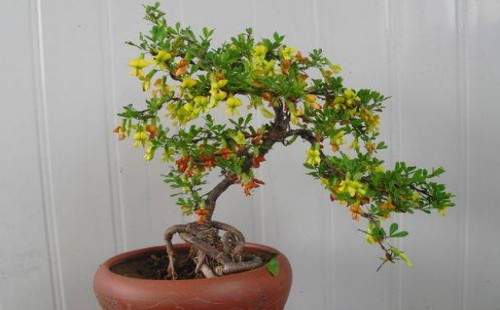
First, we need to understand that Caragana has relatively poor water tolerance. For routine watering, the principle of “don't water until dry, and water thoroughly when you do” is generally adopted, which means you should wait until the potting soil dries out before watering, and water thoroughly until water drips from the drainage hole at the bottom of the pot. Relatively speaking, the growing season and flowering period have a greater demand for water, especially during the flowering period, when the potting soil should be kept consistently moist to extend the flowering period.
But for newly transplanted or newly potted Caragana, since its root system has not yet recovered its normal water-absorbing capacity during the acclimatization period, its water demand is very small. Therefore, generally only after 3-5 days from potting can you water it thoroughly once as settling water, and after that there is no need to water again in the short term; if it gets too dry, you can mist it appropriately. If you blindly give too much water while its root system has poor water-absorbing capacity, it often causes root suffocation, thereby increasing the risk of potting failure. Generally, only when the plant has successfully acclimatized and sprouted new branches and leaves can you gradually start watering.
Moreover, even after acclimatization, watering must be done properly, and you must absolutely avoid the potting soil being too wet or waterlogged for a long time, otherwise it will likewise cause root rot. After all, Caragana is drought-tolerant but not water-tolerant, so it is better to let it dry out than to let it be flooded. By comparison, the growing season and flowering period consume more water, so watering can be appropriately increased, especially during the flowering period. This is because the flowering period not only needs a large amount of water to support blooming, but also because Caragana's flowering period falls in spring and summer, when temperatures during full bloom are often very high and water evaporation is high, so watering should be increased accordingly. But in summer, watering should avoid the high-temperature hours of the day and be done mostly in the morning and evening, combined with misting.
In addition, after each fertilization, water promptly to dilute and dissolve the residual fertilizer, avoiding localized excess fertilizer that causes root burn. Not only that, after watering you also need to keep the environment well ventilated, especially during the flowering period when temperatures are relatively high, because when hot, humid and unventilated conditions occur, it may cause poor growth of the plant and may also breed pests and diseases. For flowering plants, the impact is often quite significant.