How to fertilize a Caragana bonsai? There are particular considerations for choosing fertilizer
Caragana is a bonsai tree well suited to flower viewing, with characteristics of loving light, tolerating drought and cold, and it has strong sprouting ability and grows very rapidly, so during daily care and management, attention must be paid to pruning to prevent new shoots from ruining the beauty of the original tree shape. But this alone is not enough. Since Caragana rather likes a fertile and loose growing environment, too much nutrients will accelerate the sprouting of branches and leaves, and the leaves will grow relatively large, which is very unfavorable for a flower-viewing bonsai. Therefore, proper fertilizer control is also necessary. So, how to fertilize a Caragana bonsai?
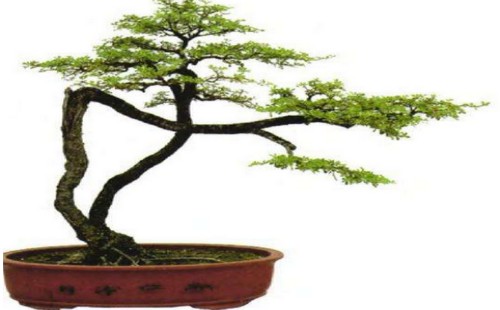
The purpose of topdressing Caragana is to allow enough nutrients in the pot to sustain its flowering, but if a plant potted in the current year grows relatively weakly, then generally no topdressing is needed that year, otherwise the originally fragile root system may be damaged, especially the newly sprouted roots. For plants with relatively vigorous growth, annual topdressing should also not be too much; generally it is enough to apply a decomposed dilute liquid fertilizer once a month. This is mainly to prevent Caragana leaves from growing too large and too many, which would affect the flowering effect.
During daily care and management, it is generally unnecessary to apply additional other fertilizers. However, before and after the flowering period and during the dormant period are exceptions. When flower buds form, some dilute potassium dihydrogen phosphate can be sprayed to improve flowering quality and extend the flowering period, with the concentration generally controlled at 0.2%. After flowering, it is also necessary to topdress once, mainly because the plant consumed a large amount of nutrients during the flowering period, and nutrients need to be replenished in time to restore tree vigor and promote the growth of branches and leaves. When entering the winter dormant period, a base fertilizer can be applied once.
For collected wild stumps, after the Caragana stump is potted and survives, it generally needs to wait until the newly sprouted tender branches become woody before fertilizing; fertilization must not be done too early, otherwise it is easy to cause some damage to the new roots. Even after the plant has survived, fertilization should still adhere to the principle of "light fertilizer applied frequently," and topdressing can be maintained once every week. In particular, excessive fertilization should be avoided. Although Caragana likes fertilizer, it is also tolerant of barren soil, and too much fertilizer can easily cause fertilizer burn. So, what fertilizer should be used for a Caragana bonsai?
Spring and summer are the peak growing seasons for Caragana and also the peak flowering seasons, with a high demand for nutrients, mostly by topdressing nitrogen fertilizer, but after the Beginning of Autumn the focus of fertilization should be adjusted, often mainly by topdressing phosphorus and potassium fertilizer. At the same time, it also needs to be combined with foliar topdressing, and a dilute potassium dihydrogen phosphate solution can be sprayed 2-3 times. If repotting is to be done, sufficient base fertilizer can be applied along with repotting, preferably by mixing and applying decomposed sesame cake, soybean meal, bone meal or an appropriate amount of poultry manure for better results. Apply a quick-acting dilute liquid fertilizer once before sprouting and once before and after flowering.