How to quickly propagate Anthurium? A detailed guide to tissue culture techniques
There are quite a few ways to propagate Anthurium potted seedlings. You can grow seedlings not only through conventional methods such as sowing, cuttings and division, but even through tissue culture. And the tissue culture propagation process for Anthurium can be carried out with the help of glass bottles through a root-free method, and the propagation efficiency is very high, with fast propagation speed. Today, the editor will share with you the rapid propagation technique for Anthurium through tissue culture.
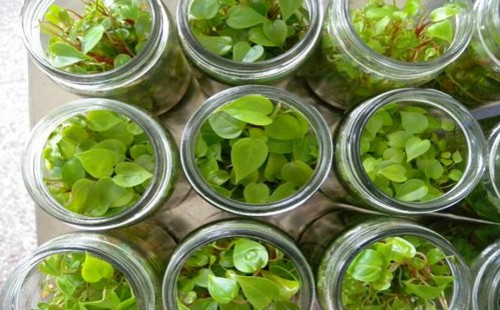
In the tissue culture process of Anthurium, because the multiplication speed in the later stage is relatively fast, sometimes it is necessary to use nutrient solution together with growth hormones to temporarily control the growth speed of the seedlings. This is mainly done to buy more sufficient time for rooting and inoculation. Using glass bottles to achieve root-free cultivation makes use of the aerial roots naturally produced by Anthurium during tissue culture to replace the traditional rooting practice. This is an innovative technique.
However, this method has relatively high environmental requirements. It is generally carried out in a greenhouse, and it also needs to be equipped with comfortable seedling beds. Cultivating in a greenhouse can avoid the invasion of pests and diseases, and the temperature can also be guaranteed, so a greenhouse is a very suitable insect-free and disease-free space environment for tissue cultivation. Below, let us look at the specific operation methods and technical points!
1. Select plants that are in the multiplication stage and have 3-4 aerial roots and a seedling height of about 5 cm or more, and cut them off starting from the part of the stem that has begun to thicken. If the aerial roots carry some culture medium, it is recommended to rinse it off with clean water.
2. Plant the Anthurium seedlings into plug trays in order from large to small. For the substrate in the plug trays, it is recommended to use peat, and it is more suitable to ensure that the fiber length is kept between 2-5 mm. If the fiber length is too long or too short, it is often not quite suitable, so the size of the peat particles needs to be well controlled.
3. After planting the Anthurium seedlings in the plug trays, water them thoroughly once in time, and then place them on the seedling bed. During this period, pay attention to maintaining the humidity needed for seedling growth. Generally, after about a week, the substrate will appear semi-dry. At this time, you can water it once with a nutrient solution dripped with an appropriate amount of auxin, which can effectively promote the seedlings to sprout new roots. After the seedlings grow new roots, we can resume normal care and management.
It should be noted that because the multiplied seedlings are still relatively tender after coming out of the bottles, and their sugar content is also relatively high, they are more likely to attract pests. However, the seedlings at this time are not suitable for pesticide spraying for prevention and control, so once pests are detected, manual pest removal or isolation treatment should be carried out in time. Although they are cultivated in a greenhouse, it is still difficult to avoid the breeding of some pests, so during the cultivation process, insect-catching bait, insect-proof nets or insect-proof boards should be prepared and placed, while frequently observing the situation of pest infestation and being ready for manual pest catching at any time.