Orchid Division: Time, Methods and Precautions - Full Illustrated Guide
Many gardening friends enjoy growing orchids, but potted orchids generally, after 2-3 years of growth, will send up a large number of new orchid shoots. As these shoots keep sprouting and growing, the capacity of the pot is limited and naturally cannot hold too many shoots. Moreover, the soil in the pot is also limited, and the nutrients will be depleted. With too many shoots, the overall growth of the plant will inevitably be affected.
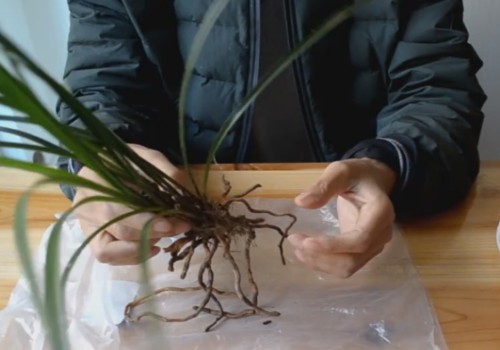
Whether from the consideration of promoting the growth of the orchid shoots or from the consideration of the ornamental value of the potted plant, at this point it is necessary for us to divide the orchid in time. Otherwise, the shoots in the original pot will not have enough space to grow, and the overall ornamental quality of the potted plant will also be greatly reduced. So how often should potted orchids generally be divided?
Generally speaking, the time for dividing orchids is best chosen in spring and autumn. In summer, with high temperatures and high humidity, division should generally be avoided, otherwise it is easy to contract pathogens and cause the orchid plant to become diseased. In winter, because the temperature is too low and plant growth is slow, division often makes it difficult for the orchid shoots to quickly establish themselves in the pot, so winter is also not suitable for division. Therefore, when dividing orchids, we must choose the right timing.
In addition, we also have two principles: first, do not use orchid plants with broken shoots or buds; second, do not use orchid plants infected with a virus, otherwise there will be a risk of plant death, or at least the plant will show poor growth. These two points are factors we must focus on when dividing orchids. Below is the process of dividing orchids, now shared with everyone.
To divide an orchid, you must first remove it from its pot. Taking Cymbidium goeringii as an example, before dividing, carry out the necessary pruning first. Mainly, cut off the empty roots and shriveled pseudobulbs of the orchid plant, and also cut off the withered yellow leaf tips and rotten leaves. After pruning, we can find the connecting rhizome at the base of the orchid plant and prepare for division.
Generally there is a principle for division: for Cymbidium goeringii, divide into two or more shoots, while for Cymbidium faberi, generally divide into three or more shoots, and try not to plant a single shoot separately. This is because when a single shoot is potted, the small shoot often grows too thin and small, and it is also not easy to bloom. For the pseudobulbs (connecting rhizome), carry out scientific division according to the above principles.
But when division meets resistance, do not pull hard, otherwise it is easy to damage the orchid shoots. Generally, first find the connecting rhizome, then after separating the shoots, gently pull them left and right, because the connecting rhizome area is generally relatively easy to loosen, just like a person's joint, which can be gently twisted. The correct method is to hold the pseudobulbs with both hands respectively, then gently rotate them in opposite directions, and after several times the orchid shoots can be separated.
After the sealing is completed, a wound may remain at the connecting rhizome area, and we can use thiophanate-methyl to treat it. Just apply it directly to the wound, then let the treated wound air-dry slightly to promote clotting and drying of the wound. After that, we can pot these divided orchid shoots.
There are also some points to note during the division of potted orchids. First, the timing of division must be well controlled; generally, division is carried out in spring or autumn after the mother plant has grown for 2-3 years. Second, division should not be done too frequently. Third, weak small shoots cannot be divided and potted separately. Finally, orchid shoots without a root system cannot be divided and potted.