Tulip Bulb Propagation Methods Explained in Detail, Easy to Master
Tulips are plants with very delicate and beautiful blooms, and there are also many varieties, so the flower colors are very rich. This flowering plant is usually propagated by sowing seeds and dividing bulbs. Today, the editor will share with you the tulip bulb propagation methods and process, hoping it will be helpful to everyone.
I. Selection of Bulbs
Usually, you need to choose bulbs whose skin looks relatively smooth and intact, and which feel very plump when squeezed. This is because such bulbs tend to have stronger sprouting ability, and after emergence the growth is also better.
II. Treatment of Bulbs
Before using bulbs for planting, we need to soak the bulbs in a carbendazim solution to sterilize and disinfect them. This is because during transport or storage, bulbs will inevitably be infected with some harmful bacteria. Soaking them in the medicine can kill most of the pathogens. Generally, dilute with water at a ratio of 1:1000 and soak for about half an hour. After soaking the bulbs, take them out to dry off the moisture, and they can be directly planted in pots.
However, tulip bulbs generally need low-temperature treatment to sprout successfully, but tulip bulbs bought from flower markets today have generally already undergone this step, so after buying them back, they can usually be directly planted in pots after disinfection and sterilization treatment. Of course, if you are not at ease, you can consult the seller clearly when buying the bulbs before making the purchase.
III. Preparation of Soil
The soil used for cultivating tulip bulbs must be fertile and loose, breathable and permeable, and not prone to compaction. If the soil is too poor in looseness and easily compacts, it often tends to inhibit the rooting and sprouting of the bulbs. Generally, use general-purpose soil, peat soil, and perlite, mix them thoroughly in a ratio of 3:1:1, and then use it. The soil prepared this way is both loose and not prone to compaction.
IV. Selection of Flower Pots
When using flower pots to plant tulip bulbs, the flower pot must be chosen well; it should not be too large or too small. Generally, a 1-gallon flower pot is sufficient. If the flower pot is too large, it often requires a large amount of soil, and after watering and fertilizing, nutrients are likely to become too dispersed; if the flower pot is too small, there is often too little soil, so there are fewer nutrients in the soil, and after watering and fertilizing, nutrients are likely to become too concentrated.
V. Planting Process
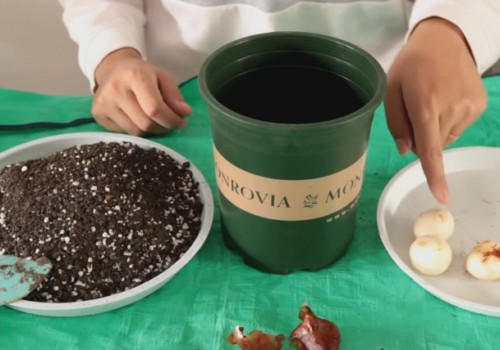
First, place a layer of larger-particle ceramsite, stones, or tiles at the bottom of the pot, then cover with a layer of soil. Then evenly scatter more than 10 grains of slow-release fertilizer as base fertilizer, continue to cover with a layer of soil, mix the fertilizer and soil evenly, and continue filling with soil. Until the soil thickness reaches about 8-10 cm. Finally, place the tulip bulbs in the pot. Usually, a flower pot with a diameter of about 15 cm can hold 3 bulbs, while making sure the buds of the bulbs face upward. After placing the bulbs, continue filling with soil until a distance of 2-3 cm is maintained from the pot rim.
VI. Watering After Planting
After planting the bulbs, promptly water thoroughly once. Afterward, you will find that the loose soil may settle somewhat. At this time, we can continue to cover with a layer of soil. After watering, place the flower pot in a cool and ventilated place for about half a month. This is more conducive to the rooting and sprouting of the bulbs. Generally, after flower buds appear, light should be increased in time to ensure sufficient light, so that flowering can proceed smoothly.