How to propagate roses by cuttings to improve the survival rate
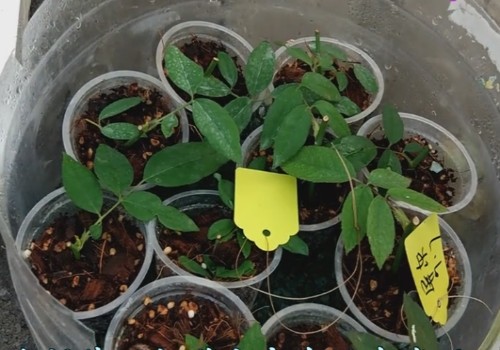
Actually, this method is very simple too: use an oil drum to propagate roses by cuttings, and the survival rate can reach 99%, with the young plants growing really strong. If you have never tried it, as long as you follow the editor's method for cuttings, the survival rate can reach at least 95%, and even 100% is possible.
People living in cities often buy 4-5 liter cooking oil. After using up the oil inside, we should not throw the oil drum into the trash, but can use it to propagate roses by cuttings. The process is as follows:
First, cut the oil drum in half crosswise so it becomes two parts. The lower part can be filled with substrate to root rose cuttings, and the upper part can be used to cover the cuttings to retain moisture. Of course, a hole also needs to be punched in the bottom of the oil drum for drainage, so that whether you water directly or spray water, no water will accumulate at the bottom of the container.
Of course, it is still recommended to place some crushed stones or rubble at the bottom of the container to enhance drainage. And because the bottom of an oil drum is usually uneven, adding a layer of crushed stones or rubble and the like often also makes the bottom look flatter.
Next, prepare some disposable plastic cups, then poke some holes in the bottom and sides of the cups. After filling them with substrate, water will not accumulate inside the cups when watered, with an effect similar to root-control pots.
Next, fill the cups with cutting substrate, then insert cuttings of different rose varieties into the cups separately, and at the same time stick a label on each cup, noting the cutting variety and date, so as to distinguish the cutting growth results of different rose varieties.
Taking Green Calyx as an example, for this variety, generally after about 20 days of cuttings, I can get snowy white roots, and the young plants also grow very strong, so it can be said that the cutting is very successful.
After inserting cuttings of all rose varieties separately into different plastic cups, put these cups together into the oil drum with the drainage layer already built. If no yellowing or blackening of leaves appears in the first week, it can basically be confirmed that the cuttings are going relatively smoothly and successfully. Because the first week is usually quite critical; if problems occur with the cuttings, they generally also happen within the first week.
Here it is necessary to mention the substrate used for the cuttings. The editor recommends using coconut coir. Because coconut coir, as a cutting substrate, is very loose and breathable. After filling each cup with substrate, use hymexazol diluted at 1500 times into a solution to water the substrate for sterilization and disinfection. Of course, the inner wall of the oil drum and the crushed stones or tiles at the bottom of the drum must also be thoroughly watered. This can achieve an overall sterilizing and disinfecting effect.
Then use rooting agent diluted at 10 drops per 500 milliliters of water, and soak the cuttings in it for 20-30 minutes. Finally, we just need to insert the cut rose cuttings of different varieties separately into different cups. After the cuttings are done, spray the inside of the drum thoroughly once more with hymexazol solution. When finished, cover it with the upper half of the oil drum.
Of course, the maintenance and management work before cutting propagation is also very important. In the early stage of cutting, a cool environment that can receive scattered light should be provided. After a period of time, we can open the oil drum cover, take out the seedling cups inside the drum, and observe the rooting condition of the cuttings. When we find rooting, we can apply some water-soluble fertilizer as a top dressing, of course diluted into a 1000-times solution, and spraying it is more effective. When the cuttings have filled the cups with roots, we can choose the right time to take them out and transplant them into pots.