What to Do If Roses Fail to Root After Cutting or Air Layering
There are many propagation methods for roses, among which cutting and air layering are relatively more efficient and have a higher survival rate. However, sometimes we find that whether it is a cut rose or an air-layered rose, we often only see callus tissue but no roots. So in this case, why do roses only grow callus tissue without rooting?
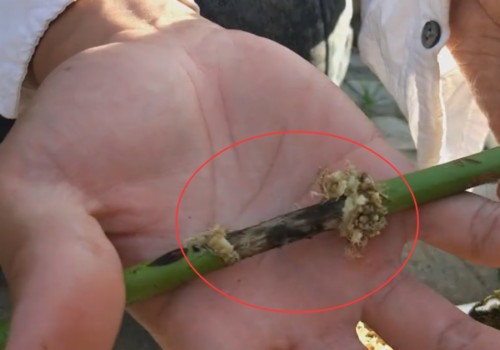
Research has found that whether roses are propagated by cutting or air layering, the most critical factor behind the situation where only callus tissue grows but no roots form is that rooting hormone was not used during the operation. Therefore, whether by cutting or air layering, although callus tissue can grow smoothly, after all, the plant has a self-repair function.
This is mainly because plants contain cells with non-directional differentiation ability. Generally, in an environment where the substrate is moist, air humidity is high, and light is relatively poor, callus tissue can be induced into roots, but this induction is not 100 percent successful. Those successfully induced will naturally form roots, while those that fail to be induced cannot become roots. Therefore, without using rooting hormone, generally only a large amount of callus tissue grows and it cannot successfully develop into roots. So what should be done if cut or air-layered roses fail to root?
If it is a rose propagated by air layering, we can cut it off and propagate it directly by cutting, which usually still works. But if it is a rose that was itself propagated by cutting, what should be done? At this time, we can use rooting hormone and let it come into play.
In this case, we first dilute the rooting hormone into a solution in a certain ratio, and then pour it into the soil of the cut rose. Of course, at this time we can also spray some liquid fertilizer on the cuttings. Then the part of the cuttings in the soil will slowly grow roots.
Of course, there is another factor, which is that when carrying out air layering, the cambium on the branch was not completely removed. So after peeling off the bark layer of the branch, we should use a small knife to scrape clean the white layer outside the woody part. If it is not scraped clean, the cambium on it will produce callus tissue, and finally the bark layers at both ends of the wound will connect together, causing the phenomenon of no rooting.
So, in order to allow rose seedlings propagated by cutting, air layering and other methods to root smoothly, the following conditions need to be met:
1. Before cutting or air layering, we must remember to use rooting hormone.
2. If callus tissue appears at the wound after cutting or air layering, we can use rooting hormone to make an easy solution for watering or soaking.
3. If the cuttings or air-layered seedlings have rooted but do not sprout, we can spray a little water-soluble fertilizer on them. Let them continuously accumulate nutrients and energy, so that they can both grow roots and sprout.