How long after sowing thornless roses can you graft roses onto them?
It is often said that autumn is the season of harvest, and that is absolutely true. The fruits produced by thornless roses (Rosa multiflora) are ready to be harvested, and they can be sown to breed rose seedlings. As everyone knows, roses are an excellent rootstock material for grafting roses. For rose varieties that are naturally weak in growth, grafting them onto roses for improvement often produces remarkable results. So, how long after sowing thornless roses can you graft roses onto them?
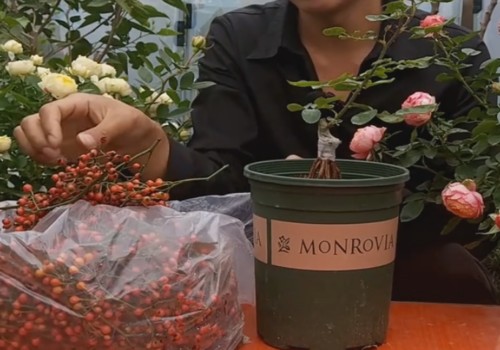
Using roses as rootstock to graft roses can often increase the growth rate of roses by 3-5 times, which is excellent for improving the efficiency of rose cultivation. However, when growing roses by sowing, if the seeds you buy have been removed from the fruit pulp, the germination rate is generally very low, sometimes even less than 1%.
Therefore, when sowing, you need to use seeds that are still wrapped in the fruit pulp, and the seeds must be fresh, because fresh seeds have higher vitality and naturally a higher germination rate. Do not buy seeds that have already dried out completely for sowing. Otherwise, the germination rate will be greatly affected.
However, generally about one month before sowing, the seeds need to be removed from the fruit pulp, because the pulp contains a substance that inhibits seed germination. Then mix the seeds with coarse sand or perlite in equal proportions, put them in a plastic bag, and place them in the refrigerator to chill for a period of time. Keep the refrigeration temperature between 1°C-2°C, and after about 1-2 months of chilling, they can be taken out for sowing.
Moreover, before sowing we also need to carry out the necessary treatment of the seeds. Before sowing roses, it is recommended to treat them with gibberellin, with the concentration controlled at about 150 mg per 1 liter of water. Then soak the rose seeds in the solution for 24 hours before sowing; this gives a better germination result.
When sowing, first level the soil, then water it thoroughly, then evenly scatter the seeds together with the perlite or coarse sand into the soil. Then cover with soil. However, covering with soil also requires a bit of skill. If the covering soil is slightly thicker, the seedlings will grow taller after germination, the hypocotyl will also grow longer, and the rootstock used for grafting later will grow taller, making it easier to work with.
However, generally we only need to cover with 1-2 cm of soil. At the same time, build a small frame over it. In spring, the seeds will sprout quickly. Then, after growing them for another year, we can use the root grafting method to graft and cultivate roses. Moreover, you can dig them up and graft at any time, with a survival rate as high as 99%, giving excellent results. This often gives a much higher survival rate than directly buying seedlings for grafting.