How to Divide a Peace Lily: A Full Breakdown of Precautions
These days, many households like to grow peace lilies in pots. But for ordinary home growers, there are not many propagation methods available, and the most commonly used one is division propagation. Peace lily division propagation means that when the mother plant has grown dense in the pot and has already filled the entire space inside the pot and needs repotting, you take the plant out of the pot, divide it into several plants, and then pot them separately into different pots.
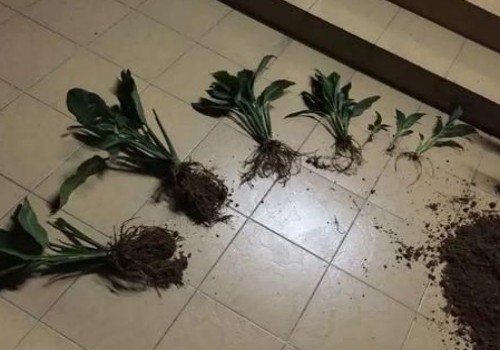
Division is one of the most commonly used propagation methods in home potting, and it has the characteristic of a high survival rate. But in the process of mass production at planting bases, the method generally adopted is test-tube cloning to obtain small potted seedlings. So the cloned seedlings look very uniform in growth.
But when propagating peace lilies at home, using the cloning method to obtain peace lily seedlings is often inconvenient because the facilities and equipment are incomplete and the operation is difficult. Therefore, for home potted peace lilies, division is usually used to obtain potted seedlings.
When dividing a peace lily, you must never pull or tear it forcefully, otherwise it is easy to injure the plant's root system and affect how well it establishes after potting. Instead, you need to separate it along the natural gaps formed between the plants, as this causes the least damage to the plant and achieves the effect of turning one pot into many pots. So, specifically, how do you divide a peace lily? What precautions are there?
1. Time for Division
Since the peace lily is a tropical plant, it prefers a warm or even hotter growing environment. Therefore, peace lily division should preferably be carried out in May-June. During this period, not only is the plant's activity high and its growth good, but after division and potting it is also easier for it to establish and survive.
2. Preparing the Potting Soil
The soil used for growing peace lilies must have high looseness and good permeability, and you must never use relatively sticky and heavy soil. Usually, a mixed substrate of peat soil, leaf mold and perlite can be used for cultivation, and when potting you can also add some flower fertilizer as a base fertilizer.
3. Division Process
First we need to choose a pot of densely growing peace lilies, then take it out of the pot and shake off the old soil clinging to the roots. Then, based on the gaps between the roots, we divide the roots together with the plants into several portions, making sure that each separated peace lily has both roots and stems. Then simply pot these divided peace lilies separately in pots.
Precautions:
1. When dividing a home potted peace lily, it is generally more suitable to divide the mother plant into 2-3 plants. Because if it is divided into too many, each peace lily often has relatively few roots at the lower end, and after potting it is not easy for it to establish and survive.
2. During the division process, you must split it according to the gaps that appear at the plant's root and stem parts, that is, the joining parts, and when possible, try not to use a knife; you need to minimize the damage caused to the plant as much as possible.
3. After potting the divided peace lilies separately, place them in a cool and ventilated spot to recover, and do not rush to let them receive light, especially direct strong light, otherwise it will affect the plants' survival.