Benefits of Growing Freesia from Seed
Freesia not only blooms beautifully but is also very fragrant, and since it blooms at the end of the year, many gardening friends grow it as a potted plant for the New Year. There are usually two methods of propagating freesia, namely: seed propagation and corm propagation. Although both methods can produce potted seedlings, corm propagation is generally used.
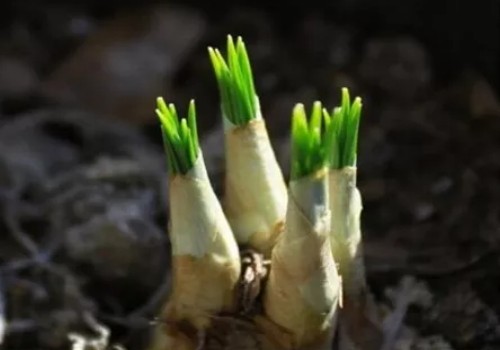
Compared with corm propagation, seed propagation has quite a few disadvantages. First, seeds are not easy to obtain; second, the seeds are rather difficult to germinate; and third, the entire process of raising the seedlings is quite time-consuming and labor-intensive. Compared with corm propagation, these are all shortcomings of growing freesia from seed, so home growers generally do not use the seed propagation method.
But this does not mean that seed propagation is all disadvantages with no advantages; in fact, seed propagation also has certain benefits. Below, the editor will share with you the benefits of growing freesia from seed.
1. Seeds have no dormancy period; corms have a dormancy period
Freesia seeds do not have the obvious dormancy habit that its corms do. Generally in summer, after the plant turns yellow and withers, the freesia corms growing in the soil also enter a dormant state. And corms in the dormant period, even if planted in soil, often cannot sprout.
Freesia seeds, however, can generally be sown immediately after harvest, because they do not have the characteristic of dormancy. As long as growth conditions are met, they can sprout. In this way, we can flexibly arrange the sowing time to propagate freesia seedlings. When using corms for propagation, however, no seedlings can be raised during the dormancy period.
2. Seed propagation grows more stably than corm propagation
Freesia propagated from seed can, after about one year of growth, produce corms capable of flowering, and the diameter of the corms can generally reach more than 1 cm. In autumn, the normally growing seedling can be directly transplanted into a flower pot to continue growing; it adapts to the pot relatively easily, grows more stably, is more likely to produce flowering corms, and the plant has stronger resistance, so it blooms more easily.
If we use corms for planting, however, we first need to get past the dormancy period, and then plant them in a flower pot in autumn. But the corms likewise need to go through a process of sprouting and growing before they become seedlings. Not only that, planting corms directly in a flower pot also makes it hard for them to sprout, and sometimes it is even necessary to carry out pre-sprouting treatment.