Can the fruits produced after freesia blooms be sown?
Freesia is a flowering plant that begins blooming toward the end of the year. Because of its high ornamental value, showy blooms and rich fragrance, it is generally grown as a New Year festival flower to add festive cheer. It is also a flowering plant with bulbs, and underground corms are usually used to propagate young plants. So, can the fruits produced after freesia blooms be sown?
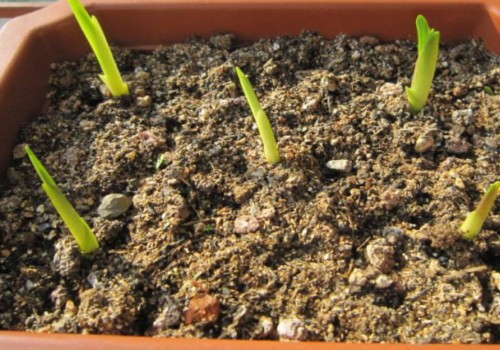
What, freesia even produces fruit? Perhaps quite a few growers will ask this question. In fact, freesia can produce fruit, but because natural pollination is relatively difficult, many growers keep it until it withers without ever seeing it set fruit. Usually, we need to use artificial pollination to encourage it to set seed.
However, even if we obtain freesia fruits, sowing them directly does not easily produce sprouts. Although its seeds do not have the dormancy characteristic of corms, getting the seeds to sprout smoothly often requires placing them in a dark, light-deficient environment to force germination. It is also recommended to use a seedling tray and cultivate them in a greenhouse environment.
Compared with growing from corms, sowing freesia seeds is often more time-consuming and laborious, with a more complicated process and more steps, so it is not advisable. Generally, after freesia blooms it must be successfully pollinated to produce mature fruit, and the seeds mature in May-June. The mature seeds also need to be harvested in time, otherwise they may scatter and be lost.
And more importantly, although the seeds can be sown immediately after harvest, they generally need to be forced to germinate in advance, and they also need to be cultivated with the help of a greenhouse and a seedling tray. This is because in a natural environment, freesia seeds are often limited by growing conditions, resulting in a relatively low germination rate. And even when grown in a seedling tray in a greenhouse, it usually takes about 1 year of cultivation to obtain a flowering corm.
After obtaining the flowering corms, we still need to plant the corms in pots and then care for them carefully, only then can they hopefully bloom smoothly. Compared with the method of directly buying corms to plant, the earlier cultivation process seems somewhat redundant. Therefore, for freesia it is generally recommended to plant corms directly, which is more convenient. After all, after propagating by seed sowing, this step still has to be carried out.