Can Daphne be propagated by cuttings? Detailed explanation of the cutting method and precautions
Daphne, also known as “Qianlixiang”, is both a medicinal plant and an ornamental flowering plant. Daphne is not only ornamental but also gives off a rich fragrance. In addition, it is relatively shade-tolerant and prefers a bright environment with plenty of scattered light and good ventilation, so it is very suitable for growing indoors as a potted houseplant.
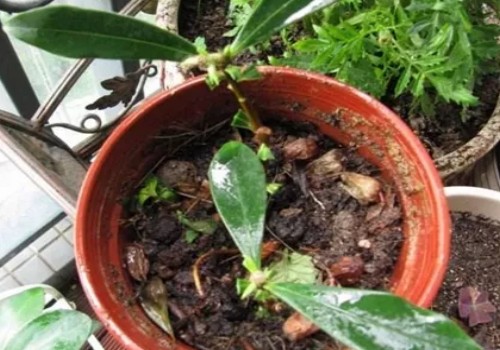
It is generally placed near a windowsill for care, which is more beneficial to its growth, because this position has good ventilation, easy access to light, and a warm environment, making it relatively easy to control and adjust the growing conditions, and very convenient in terms of management. Moreover, because Daphne's fragrance is especially rich, the breeze through the window can fill the whole room with its scent. So, can Daphne be propagated by cuttings?
In order to obtain small potted seedlings, we first need to learn how to propagate Daphne. In fact, Daphne can be propagated by cuttings to obtain potted seedlings, and it is usually propagated mainly by cuttings, with a very high survival rate. However, we need to master some techniques or precautions for taking Daphne cuttings, so that the work will be twice as effective with half the effort.
First, cuttings should be taken from mother plants that are 2-4 years old, as this can not only increase the rooting rate but also give a relatively high transplant survival rate, and can also lower or reduce the risk of disease. But when making the cuttings, it is best to cut one end of the cutting into a wedge shape, then apply a rooting agent, and the cuttings will easily survive and form seedlings.
Of course, there are many key factors affecting the rooting, survival, and even transplanting of Daphne cuttings, not limited to the cuttings themselves. They are also importantly linked to the satisfaction of many conditions such as temperature, light, water and fertilizer. Usually only by doing well in every step and element can one relatively easily propagate and cultivate high-quality, strong young potted Daphne seedlings.