How precious is Yangzhou-style penjing? Appreciation of antique works from the Ming and Qing dynasties
In the Qing dynasty, family-style penjing workshops had already appeared in Yangzhou. In the 1950s and 1960s, the Yangzhou landscaping department collected penjing from among the people, and successively collected 24 penjing from the Ming and Qing dynasties. These living artifacts have now become important collections of today's Yangzhou-style Penjing Museum.
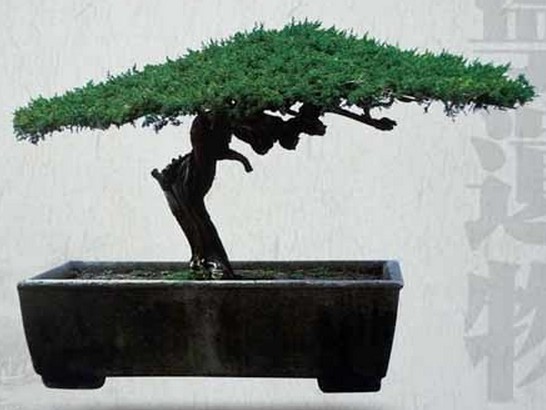
1. Late Ming dynasty Chinese juniper, a relic of Yangzhou Tianning Temple.
2. Lingering charm of the late Ming dynasty, Chinese juniper. The Yangzhou-style penjing style began to take shape in the Ming dynasty. This work is a late Ming relic, about 400 years old to date.
3. Soaring Clouds, boxwood. A typical representative work of Yangzhou-style penjing, with a tree age of over 280 years. Modeled on high-mountain pine, it was created by careful binding with palm fiber and meticulous pruning. The small branches in its "cloud pads" achieve "one cun with three bends," demonstrating the profound skill of traditional Yangzhou-style penjing. Gold Award at the 2nd China Penjing Competition and Exhibition in 1989, Gold Award at the Osaka International Horticultural Exposition in Japan in 1990.
4. Xiu Yun, boxwood. Yangzhou-style penjing flourished in Yangzhou during the Qing dynasty, and the pruning and binding techniques reached the peak of perfection. Xiu Yun is a late Qing relic. Award for Inheriting Tradition at the 2nd China Penjing Competition and Exhibition in 1989, Gold Award at the 3rd International Garden and Flower Exposition in 2002.
5. Xing Yun, boxwood. A mid-Qing relic, "clever cloud style," with clearly layered "cloud pads." Bronze Award at the Kunming World Horticultural Exposition in 1999.
6. Born Out of the Void, Chinese juniper. A mid-Qing relic, retaining the spirit of the pioneering style of Yangzhou-style penjing. Gold Award at the 6th China Penjing Exhibition in 2004.
7. Azure Dragon Emerging from the Valley, Chinese juniper. A Qing dynasty relic, more than 200 years old to date. First Prize at the 5th China Penjing Competition and Exhibition in 2005.