A Detailed Guide to Tree Species Selection and Styling Techniques of Suzhou-Style Bonsai
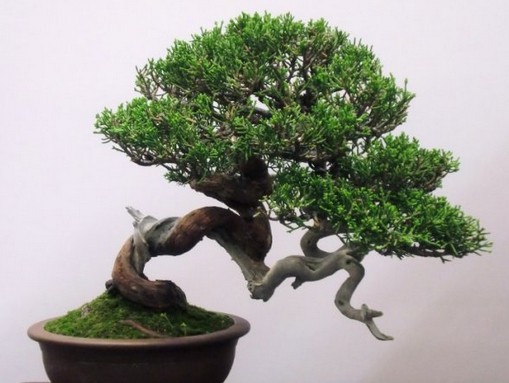
Suzhou-style bonsai is one of the five major schools of Chinese bonsai and consists of two parts: tree stump bonsai and water-and-stone bonsai. The most common varieties for tree stump bonsai include pines and cypresses, Chinese sweet plum (Sageretia thea), elm, boxwood, trident maple, Chinese fringeflower (Loropetalum chinense), crape myrtle, pomegranate, ginkgo, and others. The stone types used in water-and-stone bonsai include axe-cut stone, yellow stone, Ying stone, stalactite, sandstone-accumulated stone, thousand-layer stone, turtle-vein stone, and others. Tree stump bonsai can further be divided by its expressive form into single-trunk style, double-trunk style, forest style, cliff-hanging style, lying-trunk style, slanting-trunk style, and others, and by its cultivation form into combined-planting bonsai, single-specimen bonsai, and tree-and-stone bonsai.
I. Selection of Tree Species for Bonsai
The creative subject matter of Suzhou bonsai is mainly trees, and generally native tree species are chosen as the main material.
II. Unique Styling Techniques
Centered on Suzhou, including the Changshu area, it has spread throughout the Jiangnan region and has had a certain influence on bonsai in Shanghai and Zhejiang. Suzhou is a famous historic and cultural city in China, located in the lower reaches of the Yangtze River and in the Taihu Lake area. It is a land of fish and rice in Jiangnan, with clear mountains and beautiful waters, charming scenery, and a gathering of literati through the ages. Suzhou-style bonsai originated in the High Tang, flourished in the Song Dynasty, and reached its peak in the Ming and Qing dynasties. Bai Juyi of the Tang Dynasty, Fan Chengda of the Song Dynasty, Wen Zhenheng of the Ming Dynasty, Hu Huanzhang of the Qing Dynasty, and in modern times Zhou Shoujuan and Zhu Zi'an all contributed to the art of Suzhou-style bonsai.
Traditional Suzhou-style bonsai styling was also mostly of the regular type. The cultivation method was to begin styling from the seedling stage, but growth is relatively slow, it takes a very long time to take shape, and it produces a phenomenon of sameness.
Modern Suzhou bonsai, advocated by bonsai expert Zhou Shoujuan and craftsman Zhu Zi'an, takes nature as beauty, absorbs the essence of Ming and Qing Suzhou bonsai, emphasizes learning from nature, stresses poetic sentiment and pictorial composition, and gradually formed the styling techniques of “coarse wiring and fine pruning, combining pruning and wiring” and “pruning as the main method, wiring as the auxiliary method”, forming the elegant and antique artistic characteristics of Suzhou-style bonsai.
The entire production process of Suzhou tree stump bonsai can be roughly divided into the steps of selecting and digging the stump, shaping, raising the blank, planting in a pot, selecting buds, maintenance, wiring, pruning, developing foliage pads, and repotting. In terms of technique, it is “wiring as the auxiliary, pruning as the main method, coarse wiring and fine pruning, combining pruning and wiring”. Among these, stump selection, wiring, and pruning are the key points of tree stump styling, and are also where the styling techniques of Suzhou-style bonsai differ uniquely from those of the other major schools. (1) Stump Selection
There are two sources of material for Suzhou tree stump bonsai: wild digging and artificial propagation from seedlings. Because wild digging has the following advantages: naturally beautiful posture, fast shaping, and low cost, this method is now basically adopted. Wild stump digging mainly includes the following steps: preliminary preparation, digging time, digging method, and packaging and transportation, etc.