Do sago palm seeds need to be shelled before planting?
The sago palm is an ancient plant that is relatively difficult to flower. Once it does flower, you must seize the opportunity to let it successfully produce mature seeds. It usually flowers in late spring and early summer, and mature seeds can be harvested in autumn. At that time, we can harvest the seeds and sow them immediately, and the germination rate can reach as high as over 90%. So, do sago palm seeds need to be shelled before planting?
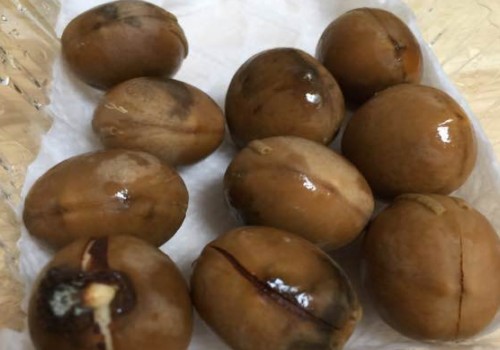
Although the mature seeds of the sago palm are tightly wrapped in a relatively hard outer shell, if we propagate sago palm seedlings by sowing them immediately after harvesting, generally there is no need to shell them; simply sow them directly in the soil. But if you want them to sprout faster, you can also carry out pregermination treatment before sowing.
If sowing directly, you can generally sow them in pots by dibbling. After controlling the spacing and evenly sowing the sago palm seeds, cover them with about 2-3 cm of soil. But sago palm seeds need a certain temperature to germinate. Generally, the environment is required to be kept at a high temperature of 30°C-33°C, while also maintaining moisture. If all goes well, they can sprout in as little as about 2 weeks.
After the sago palm seeds sprout, we still need to continue cultivating them in the dibbling pot for a fairly long period, after all, the sago palm grows very slowly. Generally, it takes 2-4 years of cultivation before we can divide them into pots and transplant them into other flower pots to manage as potted plants. But to successfully carry out the sowing and propagation process and at the same time make the seeds sprout faster, it is best to soak and pregerminate the seeds in advance.
Generally, before sowing, put the selected mature sago palm seeds into warm water at about 50°C in a thermos for half a day, about 12 hours. Then take them out and air-dry them for 1 hour, then replace with warm water at the same temperature. At the same time, add 0.1% ferrous sulfate and monopotassium phosphate to the water to make a dilute solution, then put the water-drained seeds in it and soak them for half a day. After that, we can use them for direct sowing.