Lingnan-style moss bonsai showcase natural elegance and charm
The mention of moss bonsai inevitably brings to mind Japanese-style gardening landscapes, where adorable, verdant bonsai are given various themes by people's imagination, and a small container becomes a miniature world. The benefit of making moss bonsai lies in honing our carefulness and patience, and you can hold it in your palm at any time to admire this fresh little world up close.
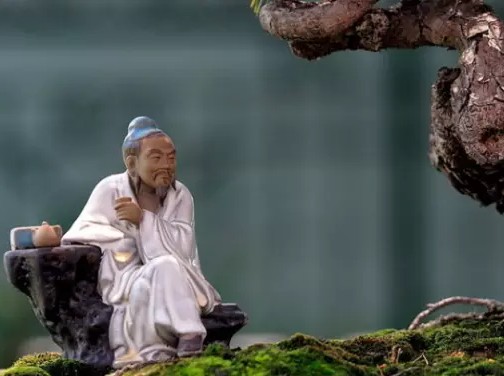
When it comes to plants, we are used to seeing tall, upright trees and roadside flowers and grasses. Compared with them, moss becomes the "dwarf" of the higher plant kingdom. They have a simple structure, with no flowers and no seeds. Although moss looks quite ordinary and is small and humble in its own conditions, with careful decoration it can also display a unique posture and charm.
Moss bonsai often performs remarkably when placed on terraces and wooden decks, and it also does well in gardens, suitable for being half-hidden among hostas and veratrum. When guests come to the house, bringing them indoors for display is very appealing and brings greenery to the living space.
Outdoor moss bonsai will grow well under natural conditions of bright, indirect light and rainwater nourishment, because these are the growing environments moss prefers. If the garden cannot achieve similar environmental conditions, simply recreate such a small growing environment for them again, try to place the moss bonsai in the shade under trees, or hang them on the porch, and keep watering and misting to maintain their vitality.
The container of this bonsai is an old feed box from the 1930s. The mosses used include white-haired moss, campylopus moss, fine-branched thuidium moss, and North American entodon moss. Together with the green woven by Parmelia lichen, they set off the red of the Japanese maple "Tamukeyama".
This is a moss bonsai made from a birdbath, with drainage holes at the bottom of the basin. Inside are arranged black-stemmed spleenwort, blue-flowered ruellia, moss, and lichen, forming a bonsai with a strong rustic style. The mosses used include dicranum moss, white-haired moss, polytrichum moss, pointed-leaf plagiomnium moss, hypnum moss, East Asian climacium moss, and fine-branched thuidium moss. The Parmelia lichen is present to enhance the sense of contrast.
A hollow tree trunk is fitted with dicranum moss, polytrichum moss, East Asian climacium moss, fine-branched thuidium moss, ox-tongue moss, and North American entodon moss, and paired with resurrection fern, Christmas fern, spotted wintergreen, hairy-leaf rattlesnake plantain, and black-stemmed spleenwort, creating an ingenious moss bonsai.
Did you know that moss is the earliest plant to appear on the wild land, the earliest group of indigenous inhabitants on the earth, and the starting point of green coverage on the planet. They always quietly appear in places that are easily overlooked. Some people say that moss is born in humble circumstances and is accustomed to plain fare, so keeping it is not that troublesome.