Suzhou Garden Bonsai Masterpieces to Appear at the Summer Palace
Suzhou is a garden city that brings together the essence of Eastern garden architecture, and since ancient times it has enjoyed the reputation that "the gardens of Jiangnan are the finest under heaven, and the gardens of Suzhou are the finest in Jiangnan." Suzhou has always been a gathering place for literati, and the "Wu School" of painting, represented by Shen Zhou, Wen Zhengming, Tang Yin and Qiu Ying, created a large number of poems, essays and paintings for Suzhou gardens, while bonsai art was long steeped in this cultural and artistic influence, gradually forming the regional characteristics and unique style of Suzhou bonsai.
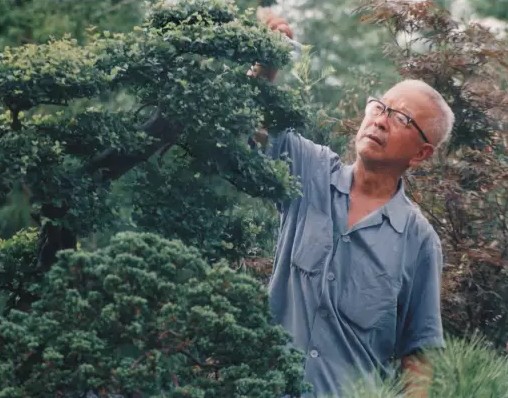
During this year's Mid-Autumn Festival and National Day period, masterpieces of Suzhou garden bonsai will enter the Summer Palace, becoming an important part of this autumn's Summer Palace Osmanthus Culture Exhibition. From September 24 to October 11, 2015, more than one hundred masterpieces of Suzhou garden bonsai will be exhibited at the Gengzhitu Water Training Hall in the Summer Palace. The works come respectively from Suzhou's Huqiu Mountain Scenic Area, the Humble Administrator's Garden and the Lingering Garden, and Summer Palace bonsai will also be included among them. During the bonsai exhibition, Suzhou Humble Administrator's Garden bonsai master Cao Jianqiang, Lingering Garden bonsai master Rui Liangyuan, and Suzhou Huqiu bonsai masters Jin Jianguo and Wang Jing will also give live demonstrations of bonsai-making techniques on September 24 and October 6 respectively. At that time, bonsai enthusiasts will be able to experience the essence of Chinese bonsai up close within the Summer Palace.
Among Chinese bonsai, Suzhou bonsai originated relatively early and developed quickly, and together with the "Yangzhou, Sichuan, Shanghai and Lingnan schools" it is known as one of the five major schools of Chinese bonsai. Suzhou bonsai took shape in the Tang and Song dynasties, flourished in the Ming and Qing dynasties, and reached its peak in the contemporary era. When the famous Southern Song poet Fan Chengda lived in seclusion at Shihu, he once made bonsai from Ying stone, Lingbi stone and Taihu stone, placed them on desks, and gave them names such as "Tianzhu Peak" and "Small Emei" for viewing. Beginning in the Ming dynasty, the bonsai art of Suzhou had already become relatively widespread, with wealthy households stacking rockeries to build gardens and common people setting up pots to create scenes. By the Qing dynasty, bonsai making in the Huqiu Shantang area was extremely prosperous, with more than 10 fairly large bonsai nurseries. In the 1930s, after the writer Zhou Shoujuan participated in the revival of bonsai techniques, Suzhou bonsai once again attracted people's attention.
After the founding of the People's Republic of China, the veteran bonsai artist Zhu Zi'an, while inheriting traditional techniques, boldly innovated and pioneered the practice of prioritizing pruning with wiring as a supplement, gradually forming the artistic style of the Suzhou school of bonsai, with influence spreading far at home and abroad. In the early 1960s, Suzhou successively built three famous domestic state-owned specialized bonsai gardens, namely the Humble Administrator's Garden Bonsai Garden, the Huqiu Bonsai Garden and the Lingering Garden Bonsai Garden, possessing thousands of fine bonsai, and a large group of professional bonsai technicians won a total of 400 awards in the first through eighth National Bonsai Exhibitions, the World Expo, the BCI (Bonsai Clubs International) Bonsai Convention and various horticultural exposition competitions. In 2013, "Suzhou School Bonsai Technique" was included in the "National Intangible Cultural Heritage Protection List."