How beautiful is Su-style bonsai? Step into Banzhuju and experience supreme serene beauty
“A foot-tall tree, a basin pond before the curved railing, the old Zen monk's pure delight rivals that of forests and springs.” Su-style bonsai is a major pillar among China's five great bonsai schools, with a long history: it began in the Tang Dynasty, flourished in the Song, and reached its peak in the Ming and Qing.
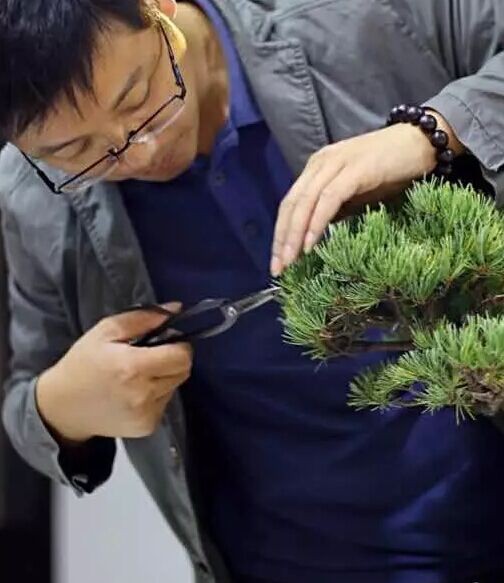
Tang Dynasty's Bai Juyi, Song Dynasty's Su Shi and Fan Chengda, Ming Dynasty's Wen Zhengming and Wen Zhenheng, Qing Dynasty's Hu Huanzhang, and in modern times Zhou Shoujuan and Zhu Zi'an, all contributed to the development of Su-style bonsai art.
Shen Xiangzhong, born in Suzhou, loved flowers, trees and bonsai since childhood, and was deeply influenced by Zhou Shoujuan. In his spare time, he travels among the southern mountains and northern peaks, seeking the scenery within the pot.
Since he himself works in architecture and also loves building gardens and planting trees, his work and hobby complement each other perfectly. He devoted himself to creating a garden named Banzhuju, where bamboo shadows and clear breezes, purple blossoms greeting the face, and vigorous pines and cypresses set off the dry landscape courtyard in delightful contrast.
He is especially fond of Diospyros rhombifolia (diamond-leaf persimmon), and keeps dozens of pots of them in the garden. Every winter, the cold branches bear red fruit, full of vitality. He also delights in the literati's pleasures: placing withered fleabane in flower vessels, burning subtle incense at his desk, savoring fine tea beneath the pines, and occasionally lodging his leisure sentiments in Banzhuju.