What are the highlights of the Su-style Bonsai Biennale
The Su-style Bonsai Biennale, having already been successfully held twice, welcomes its third exhibition at the Suzhou International Expo Center. 200 exquisite bonsai pieces, gnarled and ancient, in a myriad of forms, are presented together in a concentrated display of high-quality masterpieces that opens visitors' eyes. Most strikingly, this biennale brings together 80 pieces from famous Suzhou masters, gardens and brands, and many of the works have won awards at international and domestic exhibitions, showcasing the essence of Suzhou's folk bonsai art.
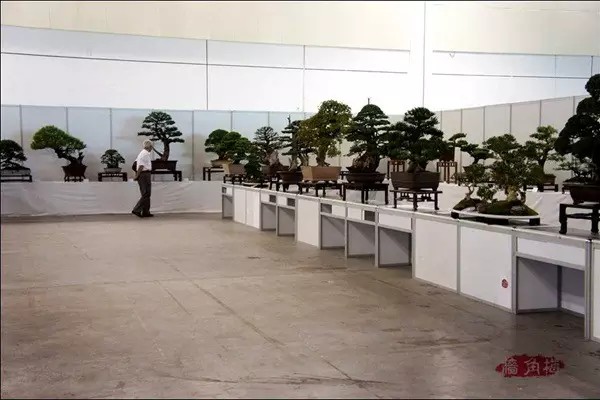
Suzhou Bonsai: Since the Spring and Autumn period of Wu and Yue, Suzhou has always been a famous historic city in the southeast region of our country. Scholar-officials felt that bonsai appealed to both refined and popular tastes, with beauty of both color and form; within a foot-sized pot one can survey the vastness of heaven and earth, and within a square inch discern a thousand fathoms of beautiful scenery, gaining the joy of mountains and forests without leaving home.
Suzhou bonsai has a long history, exquisite craftsmanship and a unique style, and is one of the major schools of bonsai art in our country. The uniquely styled Chinese bonsai has already passed through a long history of 1500 years, achieving brilliant results through the constant exploration, progress and innovative practice of artists of successive generations.
Suzhou bonsai broke free from traditional techniques and formed a unique artistic style, expressed in three aspects: the selection of tree stumps is “ancient, elegant, simple and unadorned, old yet all the more vigorous”; the production techniques are “coarse binding and fine pruning, with naturally formed crowns”; and the works are “elegant and graceful, condensed like poetry and painting.” The characteristics of Suzhou bonsai were formerly always described as “natural and simple, clear, elegant and understated.”
Su-style bonsai is one of the outstanding traditional arts of the Han ethnic group and a treasure of garden art. The bonsai art centered on Suzhou City, Jiangsu Province, has a long history, taking shape in the Tang and Song dynasties, flourishing in the Ming and Qing dynasties, and thriving in the contemporary era. It has its own unique modeling structure and artistic style, and is one of the main schools of Chinese bonsai.
The layout and conception of Su-style bonsai are meticulous and subtle, taking nature as its method, blending with the natural, with scarcely any trace of carving, and rich in artistic appeal. In handling relationships such as empty and solid, curved and straight, sparse and dense, open and closed, light and dark, the veins and logic are clear and the craftsmanship is outstanding. With its rich flavor of life, it strongly moves people, often expressing a primitive and pure natural beauty, intending to call upon humanity to love nature and to strengthen humanity's awareness of protecting and respecting nature.