A detailed guide to the moss-planting method for landscape bonsai, teaching you to grow natural moss
At the mention of moss bonsai, we inevitably think of Japanese-style gardening landscapes. These bonsai, with their cute shapes and verdant tones, are given different themes by people's imagination; a small container is a miniature world. The benefit of making moss bonsai lies in honing our carefulness and patience, and you can hold it in your palm at any time to admire this fresh little world up close.
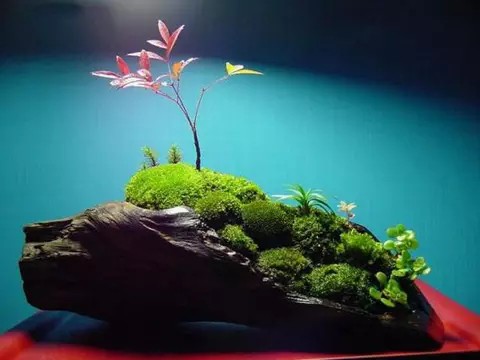
Moss bonsai often performs extraordinarily when placed on a terrace or wooden deck, and it also performs well in the garden, suitable for being half-hidden among hostas and veratrum. When guests come to the house, moving them indoors for display is very pleasing and brings greenery to the living space. Outdoor moss bonsai grows well under natural conditions of bright, indirect light and rain moisture, because these are the growing environments moss prefers. If the garden cannot achieve similar environmental conditions, simply recreate such a small growing environment for them, try to place the moss bonsai in a shaded spot under trees, or hang it on a porch, and persist in watering and misting to keep them vigorous.
Moss is an indispensable part of landscape bonsai. "Moss planting" is a common technique for greening landscape bonsai.
There are mainly three methods for "moss planting" on landscape bonsai.
1. Quick moss-growing method: Place the finished landscape bonsai in rain or river water, and after several days evenly sprinkle taro flour on the rock. Then wrap the rock with moist straw or a cattail bag, tie it up with nylon rope, spray with water and place it in a shady, damp spot. Afterwards, frequently spray with tap water or rice-washing water. In this way, during the dog days, after about two weeks, or as quickly as about one week, moss will grow.
2. Moss inoculation method: Take several blocks of nutrient soil and mix them into a paste after adding water, then shovel moss from a shady, damp place, put it into the paste-like mud and stir evenly, and evenly brush it onto rocks that have been soaked in rainwater using a small brush. Then place it in a semi-shady, damp environment, and frequently spray water with a fine watering can. Before long the moss will naturally multiply and spread. If some nutrients such as potato juice are added to the moss, the moss will grow faster and better.
There is also another moss-inoculation method: remove impurities from the shoveled moss, wash it clean, dry it in the sun, grind it into fine powder, sprinkle it on moist rocks or pot soil, and then sprinkle some very thin fine dry soil on top. Then slowly immerse the whole bonsai in water, and after it is completely soaked, gently scoop it out and place it in a shady, damp place to cultivate. If the landscape bonsai is too large, you can use a small watering can to gently spray it moist, and before long lush moss will grow.
3. Natural moss-growing method: Place the rock in a shallow pot, and frequently sprinkle it with fertilizer liquid soaked from rice-washing water, vegetable leaves, and bean shells, and after each sprinkling use a plastic bag to keep it moist. If the temperature is around 20°C, and it can see a little sunlight in the morning and evening, in about a month the rock will become green and fuzzy. Although this method takes a long time, the moss that grows is natural and traceless, as if made by nature.
When planting moss on landscape bonsai, you should also pay attention to:
The moss used for propagation should be collected from places with good environmental conditions such as pond edges, wall bases, tree trunks, and under forests. The planting position of the moss should conform to natural laws, pay attention to the changes of primary and secondary, large and small, gathering and scattering, sparse and dense, and follow the principle of "present in shady deep valleys, absent on sun-facing protruding mountains." Moss should be pruned in time to appropriately set off the beauty of the stone. Moss is suitable for growing in acidic soil; if the moss turns yellow, it can be watered several times with ferrous sulfate solution.