How were natural stone-attached bonsai discovered?
In a small hut inside the bonsai garden, a dark-skinned elderly man was using a saw knife——a specialized tool for making bonsai. The elderly man's name is Chen Changchun; he was formerly an employee of the Xiapu County Landscaping Bureau, and after retirement he focused on bonsai art and is also one of the operators in the bonsai garden.
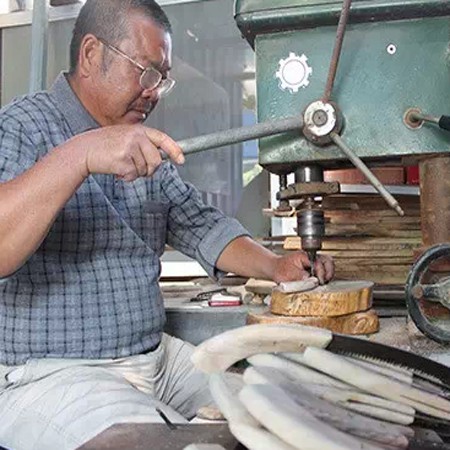
Guo Xuhui and Old Zheng told reporters that the first person to make natural stone-attached bonsai in Xiapu was none other than Chen Changchun. Natural stone-attached bonsai was discovered in 1994. “In the past, raw material collected from the mountains generally did not come with stones, because farmers thought the stones were very heavy, so they knocked them off and threw them away.” Chen Changchun said that by chance, he noticed that a purchased tree trunk was blocked by a stone and had grown wrapping around part of the stone. He felt that these stones were “a pity to throw away, and should be kept,” so he also took the stones into consideration in the overall design and created the first natural stone-attached bonsai in history.
“The original bonsai had only branches, but now bonsai with stones have richer content.” Chen Changchun's innovation won praise from other members of the Xiapu County Flowers and Trees Bonsai Association, and everyone followed suit. The Xiapu Bonsai Association also held a special exhibition of Xiapu natural stone-attached bonsai at a Cross-Strait Flower Expo, which won recognition from bonsai art masters. Later, when farmers again collected bonsai “raw material from the mountains”, they no longer knocked off the stones attached to the tree stumps.
After many years of exhibitions and business operations, as the country's only producing area for natural stone-attached bonsai, Xiapu bonsai's reputation spread quickly, and merchants from all over the country came attracted by its fame, and Xiapu bonsai gradually embarked on the path of industrialization. Last year, the Xiapu Bonsai Garden, with 43 operating households, had an annual output value of more than 30 million yuan.