How to choose pots for miniature bonsai? Keep these considerations in mind
When shaping, the tree should be transplanted from a clay pot into a purple clay (zisha) pot or a glazed pot. The shape, size and color of the pot must match the tree. In general, a tall, deep cylindrical pot suits the cascade style; an oval or shallow rectangular pot is suitable for the formal upright or slanting style; a round pot can hold low, twisted plants; a polygonal shallow pot is suitable for the tall-trunk style. In addition, the pot stand should also harmonize with the shape and color of the pot, merging into a complete artistic structure. In appraising bonsai art, the ancients had the famous saying “first the tree, second the pot, third the flower stand”.
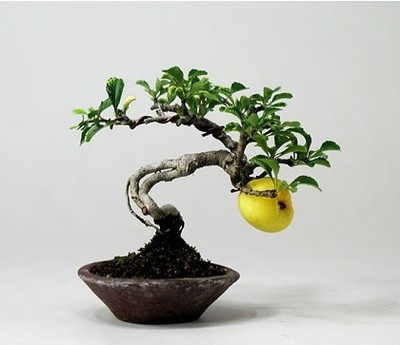
Tree bonsai is likened to a three-dimensional painting and a silent poem, which undoubtedly brings to mind the word “elegance”. Especially miniature bonsai, as a favored form of home leisure, seems to have even more personality and an air of refinement. Therefore, the texture, color and shape of the pot, and its perfect harmony with the tree, are given very careful consideration.
1. Pot matching: the pots commonly seen today are mostly Yixing purple clay (zisha) pots, Guangdong Shiwan glazed pots and stone pots, etc. Their forms come in square, round, long and diamond shapes, and differ in height and depth. Most people prefer Yixing purple clay pots; besides these, you may also choose bell-shaped vessels, vases, brush holders, ashtrays and the like.
2. Considerations:
First is the layout. The front of the pot should face the same direction as the tree's best viewing side, and should match the positioning of the tree on the pot as well as the harmony between tree and pot. Aesthetic effect must be emphasized, such as: a cascade-style tree with a tall cylindrical pot gives a sense of steepness and precipice; a waterside-style tree with a medium pot gives a feeling of swaying waterscape; a forest-style tree with a rectangular, oval shallow pot or a water-and-land pot gives a flavor of dense woods, deep mountains and broad waters; a formal upright tree with a shallow pot gives an impression of towering height and soaring ambition.
Second, soil should be filled in carefully, especially filling the gaps around the roots so that the potting soil presses tightly against the roots, then water thoroughly to settle the roots, after which normal care begins.
Third, leave a water level space around the edge of the pot so that the tree can be watered and fertilized; if there is a special need such as exposed roots, other materials should also be set up around the pot as a barrier to prevent water from overflowing. Once the roots are strong and adapted to the light, remove the barrier.
In addition, the stand should not be overlooked either; the so-called “first the scene, second the pot, third the stand” is an overall aesthetic combination.