A Master-Level Complete Guide to the Art of Root-on-Rock Penjing Styling
Root-on-rock penjing is a style of penjing art in which rock is the main element, trees grow clinging to the rock, and rock and tree form a single integrated whole. The trees are planted among the rocks, their roots reaching into the crevices to grow, their branches and trunks twisting into the stone hollows or sprouting in clusters on the rock, or hanging down below the stone, or leaning sideways against it, so that the fantastic rock and the ancient tree set each other off beautifully.
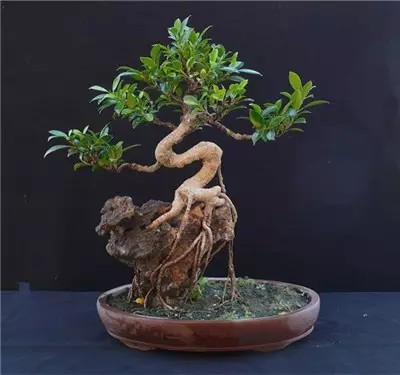
Root-on-rock penjing falls into two types: water root-on-rock and dry root-on-rock. Water root-on-rock mostly uses soft, porous stone materials, such as absorbent stone and sandstone, with holes drilled where the trees are to be planted; trees that have already taken basic shape are usually used. First lead the tree roots into the stone holes, fill the holes with crumbled soil, press the soil and roots firmly against the stone with a bamboo stick, spray the soil and stone thoroughly wet with a watering can, then place it in a shallow water basin and set it in a cool, shaded spot. Spray water on the stone and tree every day to keep up the humidity; once the tree puts out new buds, it can be given morning sun and gradually acclimated to sunlight.
Dry root-on-rock penjing mostly uses hard stone materials, such as Yingde stone (which has a great variety of veining); the tree roots are wedged into the stone crevices to create the composition. Tree species with long roots are usually used, such as Fujian tea, Chinese elm and baby's breath. Strip off all the leaves, clear and straighten the soil from the roots, and following the veining of the stone, lead the tree roots into the crevices, then bind them with wire loops.
To prevent damaging the roots, first pad the binding with rubber-wrapped wooden strips and press the tree roots even more tightly against the stone crevices, then place the stone and tree on the soil in the pot and bury the tree's fine roots in the soil.
The initial care method is the same as for the water root-on-rock type, but do not let the western afternoon sun shine directly on the roots in the stone crevices, lest the stone absorb heat and scorch the roots.
Banyan fig (Ficus microcarpa) is generally suited to the embracing-rock style of root-on-rock penjing. Once the plant has attached itself to the rock, it cannot be changed, so before starting you must think it through carefully and choose exactly the right rock and tree in terms of shape.