A Complete Guide to the Techniques of Making Water-absorbing Stone Bonsai
What is water-absorbing stone? Water-absorbing stone is also called absorbent stone (a natural air purifier). It gets this name because once water is stored in the basin, it can be drawn up to the top in an instant. Wild grasses and mosses can be planted on the stone, lush and verdant, making it an excellent material for bonsai.
Probably only gardening experts know what water-absorbing stone is. Growing potted plants on water-absorbing stone has a unique artistic charm. Potted varieties like maidenhair fern (Adiantum) and asparagus fern (Asparagus setaceus) are best suited for growing on water-absorbing stone. Take a look at the pictures and feel it for yourself!
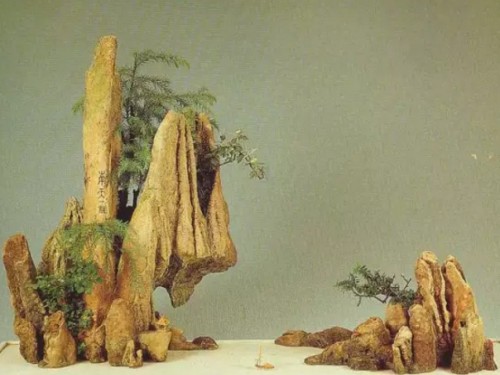
So how do you plant potted plants onto water-absorbing stone? Please see the simple method below.
First, choose the right position.
For example, for planting asparagus fern and spider plant, you need to use an iron nail and a small hammer to enlarge and deepen the existing holes. Water-absorbing stone has many crevices in the middle, so it is easy to chisel open. The hole does not need to be too big; as long as you feel you can barely stuff the roots in, that is enough. It can be a bit deeper to give the roots more space.
If it is pennywort (Hydrocotyle) and saxifrage (Saxifraga), then just use the original holes, and they will grow easily. For maidenhair fern, it depends on whether you are sowing spores or transplanting. If transplanting, refer to the method for planting asparagus fern and spider plant on the stone.
Next is adding soil.
Soil is still needed. After the plant is inserted, stuff a little soil in through the hole opening. This makes it easier to establish firmly and also helps hold the plant in place. When planting pennywort on water-absorbing stone, I always cut one node at a time and stuff them one by one into the holes, then seal with a little soil. Cut several nodes, some with leaves and some without; pennywort has plenty of nodes anyway. At first there seems to be no movement, but after a while it sprouts on its own. Once it grows steadily, it will hang down by itself, looking even better than when planted in a pot. The parts hanging into the water will grow in the water, which has a particularly special charm.
When growing potted plants on water-absorbing stone, it is even more perfect if moss can grow. So how do you get moss to grow on water-absorbing stone? The method is even simpler.
Take moss blocks dug from shady, damp places, cut them into appropriate sizes and stick them directly onto the concave grooves of the rock. They should be pressed firmly so that they fit closely against the rock. Then water them, shade them from light and keep them moist, and they will soon take hold. After that, the moss will rely on the water-absorbing capacity of the rock itself for its water supply and will grow very well.
Water-absorbing stone is easy to shape. It is porous and brittle, so you can carve grooves and hollows at will and sculpt the rockery of your ideal design. Because water-absorbing stone has strong water absorption and easily grows moss, you can fill the cavities on the water-absorbing stone with soil and plant flowers, grasses and trees in them. No watering or maintenance is needed, and they will still grow luxuriantly with brilliant blooms that dazzle the eye and leave you amazed.
In addition, when the water-absorbing stone bonsai is placed in a basin for water-absorbing stone, you can also keep a few goldfish in it, adding a lively atmosphere to the whole room. If you add a small water pump to the basin, the water-absorbing capacity of the whole absorbent stone bonsai is greatly enhanced, and water continuously falls like a waterfall from above the "real mountain," accompanied by a faint mist, a scene of endless beauty.