Bonsai Tree Stump Pruning and Shaping Methods and Techniques
Tree stump bonsai is usually made from woody plants, selecting plants with graceful posture, short stature, small leaves, long lifespan, tolerance to pruning, strong resistance, and easy shaping. Without violating the growth habits of the trees, methods such as leaf removal and pinching are used to inhibit their growth and carry out shaping. In the cultivation process of this kind of bonsai, the maker can process it according to their own intentions into various artistic forms, such as gnarled and intertwined roots, or vigorous and upright.
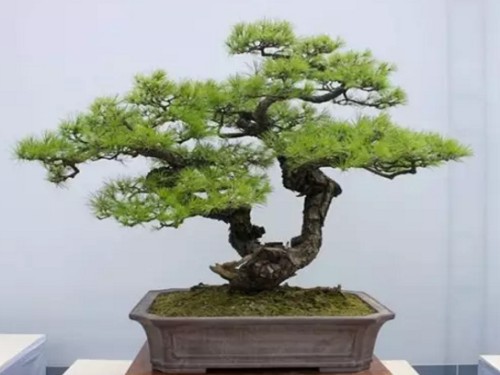
The trees in the bonsai grow continuously. In order to maintain the beauty of the tree shape, pinching, bud removal, leaf removal, and pruning must be carried out continuously 3-4 times. The fertilization, watering, repotting, and soil changing of tree stump bonsai are similar to those of potted flowering plants, but pruning is especially important. For bonsai that have already taken shape, measures such as pinching, tip pruning, branch thinning, bud removal, and leaf removal must be taken according to the tree species to keep it in a wonderful posture. In particular, for some stump bonsai with shaped branch pads, new branches often suddenly grow during the growing season, and these protruding branches should be cut off in time to keep the branch pads flat and the layers clear.
1. Pinching
When bonsai trees grow vigorously and you want to inhibit them, or when a certain part of the branches is too sparse, in order to promote the development of axillary buds and increase the number of branches, you can use your fingers or scissors to remove the growth point of the tender shoot (a small part at the front). This can inhibit the upward growth of the plant and promote the growth of side branches. For tree bonsai, in order to inhibit its height growth and promote the development of side branches in a flat and spreading manner, the tender tips of the branches can be removed.
2. Bud Removal
Many adventitious buds often grow from the base or trunk of bonsai trees. If they are allowed to grow, they will not only affect the beauty of the tree shape, but also consume nutrients, hinder air circulation and sunlight penetration, and easily lead to pest damage. Therefore, except for those that must be retained, all the rest should be removed. When many adventitious buds grow from the base or trunk of tree bonsai, the buds should be removed at any time to avoid the sprouting of forked branches and affect the beauty of the tree shape.
3. Leaf Removal
For foliage trees, the most suitable ornamental period is when the new leaves have just emerged. Leaf removal can make trees that sprout once a year sprout two to three times a year, and the branches formed in this way are slender and dense, making them more beautiful. For foliage tree bonsai, the ornamental period is often the period when new leaves sprout. For example, the new leaves of maples, pomegranates, and others are red. Through leaf removal treatment, the trees can produce new leaves several times a year, bright and pleasing to the eye, improving their ornamental effect.
4. Pruning
Trees that have already been processed often grow many new branches. In order to keep their tree shape unchanged, they must also be pruned regularly. All crossing branches, parallel branches, wheel branches, and all branches that hinder beauty must be pruned. As for branches affected by pests and diseases, they must be cut off in time and immediately burned. In addition, for overly dense branches and leaves, appropriate thinning is also advisable to avoid affecting ventilation and light penetration. Bonsai trees are still constantly growing. If they are allowed to grow naturally without inhibition, it will inevitably affect the tree posture and shape and cause them to lose their artistic value. Therefore, timely pruning is necessary: long branches should be shortened and dense branches should be thinned, so as to maintain a beautiful tree posture and appropriate proportions.
5. Root Pruning
When repotting, combine it with root pruning. Roots that are too dense or too long should be pruned. This can be considered according to the following situations. If the new roots of the tree are poorly developed and the root system has not densely covered the bottom of the soil ball, then the original pot can still be used for repotting, and there is no need to prune the root system. For tree species with developed root systems, where the fibrous roots densely cover the bottom of the soil ball, a slightly larger pot should be used, the dense root system should be thinned, old roots should be removed, and a small number of new roots should be retained for repotting. For some old stump bonsai, when repotting, the roots can be appropriately raised to increase their ornamental value. Also prune away old roots and part of the root ends, and cultivate with loose, fertile soil to promote the growth of new roots.