What is the market prospect for miniature bonsai wholesale?
Miniature bonsai are often deeply loved for their exquisite form and appearance. Although they are relatively small, they are very refined. Whether in terms of styling design or care and management, the creator often pours tremendous effort into them. So, what is the prospect for the miniature bonsai wholesale market? In my personal opinion, the future prospect of the miniature bonsai wholesale market is still relatively huge, and this is of great significance for promoting China's native bonsai culture and supporting the future development of Chinese miniature bonsai.
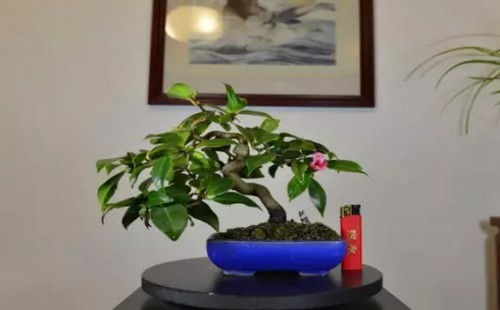
Compared with traditional bonsai works, miniature bonsai also have their own advantages: first, they are much smaller in size than traditional bonsai, while also having the basic characteristics of bonsai. The creation of one tree and one stone often requires following a certain learning from nature, so that both form and spirit are present, and the beauty and artistic conception, culture and connotation of bonsai art can be perfectly embodied. Miniature bonsai are exquisite, delicate, flexible and varied, and their requirements for pots are also diverse. Furthermore, the mini effect of miniature bonsai can be described as a condensed essence version, and it also plays a certain role in improving people's aesthetic taste.
In addition, miniature bonsai generally have relatively strong adaptability to the environment. Because of their small size, they are relatively easy to package, transport and trade. After many people obtain miniature bonsai, they often regard them as treasures and carefully care for them, so that they always remain full of vitality. Overall, compared with traditional bonsai, miniature bonsai also have their own unique characteristics and advantages. Therefore, their market prospect should have relatively broad room for development. Moreover, after deeply exploring many aspects such as their production and care, people may become even more fond of them.
First, the plants used to make miniature bonsai should be selected from dwarf varieties, especially the selection of bonsai trees. It is also advisable to choose tree species with relatively small branches and leaves, easy potting and relatively fast survival. Of course, if there are tree species with peculiar branches and trunks, beautiful flowers and fruits, and easy shaping, the effect produced is often even better. After selecting the required tree species, we can pot them in suitable flower pots. But there are also certain requirements for choosing the matching pot. Because the tree species are short and small, the selected pot also needs to be exquisitely made. Generally, small purple clay pots are used. Of course, better-looking white marble pots can also be used, and rectangular and oval ones are more commonly used. But no matter what pot is used, the bottom of the pot must have a drainage hole.
The processing and production process of miniature bonsai is often more refined than that of traditional bonsai. After all, originality should let true skill show in the subtleties. The main styling methods include the palm fiber binding method, lead wire winding method, branch bending method, climbing and binding method, and inverted hanging method. By comparison, using the lead wire winding method to shape miniature bonsai is somewhat simpler, but in order to achieve the best styling posture, it is generally necessary to choose a suitable creative method according to the tree's growth tendency and personal preference. However, the shaping of trees is generally best carried out in early spring, since bonsai trees are generally evergreen species.
But before carrying out styling treatment on miniature bonsai, we need to conceive it in advance. According to the tree's growth tendency and characteristics, together with the creator's theme and ideas, these are integrated into the bonsai creation, and finally the styling pattern is determined. In specific applications, various stones that facilitate shaping and serve to support or set off the composition are often also used, and small ornaments can also be added as embellishment, so as to highlight the tall image of the trees and rocks, making the bonsai appear more vivid, lively and true to life.
In addition to requiring creators to possess superb and skilled techniques in creation and styling, miniature bonsai also require meticulous care and management. The more detailed the care and management work for miniature bonsai, the better the overall ornamental condition of the bonsai will be. In particular, moisture retention work must be done in fine detail. Generally, the pot soil is required to maintain “dry when it should be dry, wet when it should be wet,” but the pot soaking method combined with spraying is often used to replenish water. In midsummer, in addition to timely shading, more spraying is also needed to retain moisture and lower the temperature, ensuring that the plants always maintain a fresh green growth state.
It can be seen that miniature bonsai not only have unique advantages, but their production and management also require great care, and the effort people put in is also very great. Of course, their ornamental value and artistic charm are also very outstanding, so it is only reasonable that their market prospect is very broad.