How to grow a boxwood bonsai? A step-by-step guide to care methods
Boxwood bonsai, because of its slow growth and its lush, verdant, vigorous and sturdy appearance all year round, among bonsai of many tree species, although it lacks the excessive luxury and flamboyance of high-end flowers and plants, conquers viewers with its steady, solid style and masculine character, making it highly favored by the broad community of bonsai enthusiasts, who regard it as a premium species among bonsai trees. Below, we introduce the care methods for boxwood bonsai:
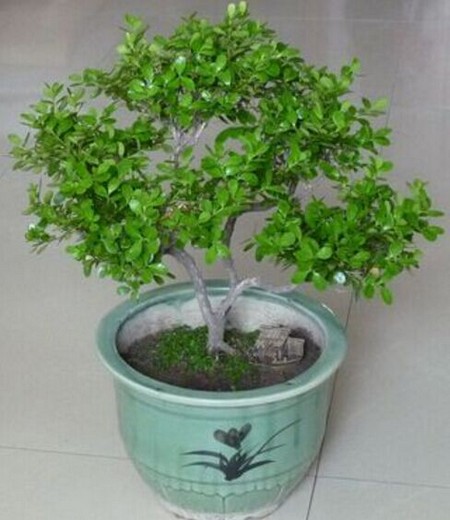
Placement: Boxwood is best placed in a semi-shaded spot, and in summer special attention must be paid to shading. In winter, except in severely cold regions, it can generally overwinter outdoors; simply bury the pot in a wind-sheltered, sunny spot, but after frost the leaf color often turns red.
Soil: It is not demanding about soil; light, fertile sandy loam is best, and for pot cultivation vermiculite, peat or soil can also be used in combination; it is relatively tolerant of alkaline conditions.
Light: It is shade-tolerant and light-loving, and can maintain good growth under ordinary indoor and outdoor conditions. In a long-term shaded environment, although the leaves can remain emerald green, the branches tend to grow leggy or become weak. After full light in autumn and entering dormancy, the leaves can turn red. Sufficient sunlight and moisture are very important for the care of Chinese boxwood (Buxus sinica var. parvifolia); it is best to choose a spot where "it can get sun in the morning, is relatively shady in the afternoon, has good air circulation, and receives natural rain and dew."
Humidity: If displayed indoors, it is best to let it get sun and rain again after ten days to half a month. The soil for Chinese boxwood should always be kept moist, because the absorption by its roots, the photosynthesis of its leaves and its entire growth process all require a large amount of water; of course, the demand also changes with the seasons and climate.
Temperature: It is heat-tolerant and cold-tolerant, able to withstand summer sun exposure and severe cold of around minus 20 degrees Celsius, but in hot, humid summer weather it should be given more ventilation and light.
Watering: It is drought-tolerant; as long as the surface soil or the soil in the pot does not dry out completely, there will be no abnormal signs. Boxwood by nature likes moisture, and the pot soil should be slightly on the moist side, but waterlogging is also undesirable. In high summer temperatures, besides shading, it also needs watering morning and evening. Step one, rinse clean without disturbing the soil. Step two, the branches and leaves must be thoroughly wet. Step three, mist. In hot weather or when the temperature is above 20°C, if the pot is not short of water, water according to steps two and three.
Fertilizing: Boxwood grows slowly and is not demanding about fertilizer. Generally, fertilize 1-2 times in spring, and once in autumn with fully decomposed cake fertilizer water. Apply a seasonal fertilizer before the seasons change, such as a bud-promoting fertilizer in early spring, a leaf-strengthening fertilizer in summer, a heat-resistance fertilizer in hot weather, and an insulation fertilizer in winter; after each pruning apply a little compensatory fertilizer, in the rainy season and hot weather when the pot has excess water apply a little supplementary fertilizer, and for poor growth apply fertilizer as appropriate.
Pruning: Boxwood sprouts relatively quickly and should be pruned frequently. Generally, after each flush of new shoots, cut off the first 1-2 nodes at the tips to prevent leggy growth and keep the tree shape attractive. It has extremely strong tillering ability, tolerates pruning well and is easy to shape. After boxwood sets fruit, it should be removed promptly to avoid consuming nutrients and affecting growth.
Repotting: Do this every 2-3 years, preferably before spring budding or after the new shoots have matured in autumn. When repotting, remove part of the old roots and get rid of 12 old soil, and change B to a pot one size larger to benefit root development. It can be repotted or transplanted in all four seasons; when transplanting in summer or when new buds are sprouting, attention should be paid to shading and preventing the pot soil from becoming too wet, otherwise the original leaves may drop.
Pest and disease control: Boxwood has relatively few pests and diseases, mainly scale insects, which can cause sooty mold and leaf drop; be sure to brush them off clean by hand, or spray to kill them with an 80% dichlorvos 1500-fold solution. Usually it is best to frequently spray water on the leaf surface to wash off dust so it grows well.