How to Grow Oriental Lilies? Detailed Guide to Growing Methods and Precautions
Oriental lilies have always been regarded as the queen of lilies, with petals free of any spots or blemishes, very beautiful to look at, and Oriental lilies have a faint delicate fragrance, making them very suitable for home environment decoration. Below, the editor will tell everyone about the growing methods and precautions for Oriental lilies and related content.
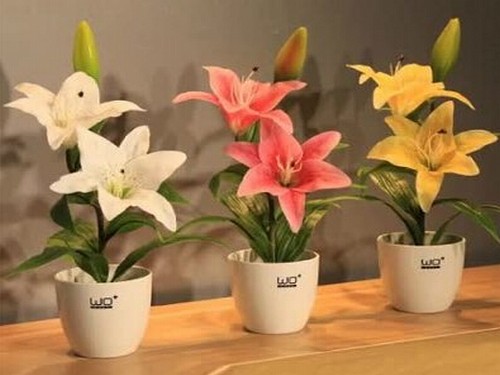
Growing methods for Oriental lilies:
1. Soil: Oriental lilies prefer fertile, deep soil rich in humus, and are most averse to hard clay; well-drained, slightly acidic soil is best, with a soil pH of 5.5-6.5.
2. Watering: Watering only needs to keep the potting soil moist; the potting soil should not be too wet, otherwise the bulbs rot easily.
3. Light: Potted lilies have different requirements for light intensity at different growth stages. During the bud stage, shading treatment is needed; if the leaf temperature is too high, appropriate shading should also be provided. During other growth periods, light should be increased, especially during the flower development stage. Temperature: The growth and flowering temperature for Oriental lilies is 16-24°C. Below 5°C or above 30°C, growth almost stops. Only above 10°C do plants grow normally. Above 25°C, growth stagnates again. If the winter nighttime temperature is below 5°C for 5-7 consecutive days, flower bud differentiation and flower bud development will be severely affected, delaying flowering or even causing blind buds and split flowers.
4. Fertilizing: Lilies have a relatively high demand for nitrogen and potassium fertilizers, and should be fertilized once every 10-15 days during the growing period, while phosphate fertilizer should be limited, because too much phosphate fertilizer causes yellowing leaves. (During the flowering period, phosphorus fertilizer can be added for 1-2 days.)
5. Pests and diseases:
(1) Gray mold: Use Captan, Topsin, or Zineb at 500 times dilution for control.
(2) Damping-off: Before planting, soak in Formesol at 500 times dilution or 40% formaldehyde at 50 times dilution for 15
(3) Root rot: Diseased plants need to be pulled out, then the soil disinfected with Dexon.
(4) Insect pests: For aphids, mites, white grubs, and cutworms, use omethoate, dicofol, and poison bait for control.
6. Pruning: To make the bulb plump, lilies can be cut off at the base after flowering to reduce nutrient consumption, because flowering has already consumed a lot of the bulb's nutrients. If you want to keep the bulb for continued planting, you must continue fertilizing to replenish the bulb's nutrients. After one month, the bulb can be dug out, the fibrous roots cut off, and placed in the refrigerator for cold storage for a period to break dormancy, then planted again, but the flower quality will decline.
Precautions for growing Oriental lilies:
1. Flowering regulation: To make Oriental lilies bloom from November to early February of the following year, treat the bulbs first at 13°C for 2 weeks (14 days), then at 3°C for 4-5 weeks (28-36 days), so they can bloom in November-December. If blooming is required in January-February, first treat at 13°C for 2 weeks, then at 8°C for 4-5 weeks (28-36 days). At this time, after planting, the nighttime temperature is relatively low, so heating should be added to maintain around 15°C.
2. Bud abortion treatment: In forcing cultivation of lilies, when the flower buds grow to 1-2 cm, if light is insufficient, bud abortion easily occurs. Bud abortion often occurs from the end of October to mid-March of the following year. Artificial lighting can be used for supplemental light. The method is to hang one 40-watt high-pressure sodium lamp or ordinary waterproof incandescent lamp every 8-10 sq m. Supplemental lighting should begin when the flower buds are 0.5-1 cm and continue until harvest. At a temperature of 16°C, maintaining light for about 6 weeks, from 8 p.m. to 4 a.m. the next morning each day, is very effective in preventing bud abortion, advancing flowering, and improving cut flower quality.
3. Excessive plant elongation: During the growing period, Oriental lilies should have the pot rotated once a week. Otherwise, the plant tends to grow lopsided, affecting its appearance.
Oriental lilies have always been regarded as the queen of lilies, with petals free of any spots or blemishes, very beautiful to look at, and Oriental lilies have a faint delicate fragrance, making them very suitable for home environment decoration. Among the annual New Year flower army, lilies also occupy a certain position. Below, Jianwei will tell everyone about the growing methods and precautions for Oriental lilies and related content.
How long is the lily flowering period?
Starting from the bulb, it generally takes 3 months to produce beautiful lily flowers. If counting from the initial bud stage to opening, it takes about one month. If from the bud showing color to opening, it takes only 1-2 weeks. As the weather warms, the opening time becomes faster.
The flowering period can be regulated: To make Oriental lilies bloom from November to early February of the following year, treat the bulbs first at 13°C for 2 weeks (14 days), then at 3°C for 4-5 weeks (28-36 days), so they can bloom in November-December. If blooming is required in January-February, first treat at 13°C for 2 weeks, then at 8°C for 4-5 weeks (28-36 days). At this time, after planting, the nighttime temperature is relatively low, so heating should be added to maintain around 15°C.
Can lilies rebloom?
Whether lilies rebloom mainly depends on the first year of planting. If planted well in the first year, reblooming in the second year is no problem.
How many lilies can be planted in one pot?
It depends on the size of the pot. For a 2-gallon pot with a diameter of about 25 cm, planting 1-3 is fine!