How to grow an Elaeagnus bonsai? Detailed care and management methods
A potted Elaeagnus that only blooms but does not set fruit is related to the length of time it has been in a pot and to the variety, and is closely related to nutrients and management methods. Elaeagnus sets fruit easily on mountain slopes because it grows for a long time and has a well-developed root system that can absorb nutrients from a large volume of soil. But the soil in a pot is limited, so only after several years of growth, once the root system is well developed, is it possible for it to bloom and set fruit under conditions of sufficient fertilizer and good light and ventilation.
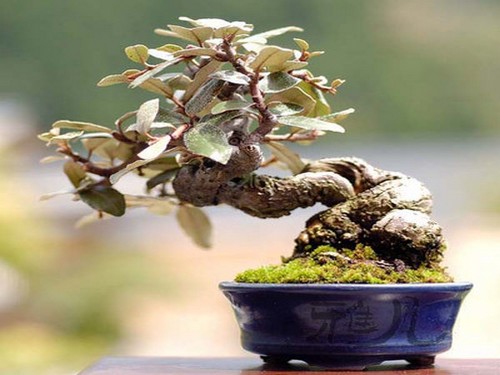
Different Elaeagnus varieties also differ in fruiting. For example, compared with large-leaved Elaeagnus, small-leaved Elaeagnus is difficult to bring into bloom and fruit, while the large-leaved one can cover the whole tree with clusters of flowers. To achieve a high fruit-setting rate after flowering, apply rotted farmyard manure every 10 days during the growing season; this way the fruit set can reach more than 40% of the number of flowers. In early spring you can then see the whole tree adorned with red berries like red jade, crystal clear and very lovely. Elaeagnus is a tree species that flowers and fruits easily; as long as you pay attention to management and apply sufficient fertilizer, it can still bear abundant fruit year after year.
Elaeagnus likes a warm, humid environment with plenty of sunlight, tolerates partial shade and drought, and slightly tolerates waterlogging. A finished bonsai can be kept outdoors in a bright, well-ventilated place during the growing season. In the high summer temperatures, shade it appropriately to avoid scorching sun, water according to the principle of "dry then wet" ("water when dry, soak when watering"), and frequently mist the plant to raise air humidity so the leaves look glossy. During the growing season, apply a rotted, dilute liquid fertilizer or a compound fertilizer based mainly on phosphorus and potassium about once every 10 days; the nitrogen content in the fertilizer should not be too high, otherwise the branches and leaves grow lush but flowers are sparse.
Elaeagnus is not very cold-hardy. In winter you can bury the pot outdoors in a wind-sheltered, sunny spot to overwinter, or overwinter it in a cool room with ample light and no lower than 0°C. In winter reduce watering appropriately, but the potting soil should not be too dry either. Repot once every 3 years; it grows better in loose, fertile soil rich in humus. You can mix garden soil, leaf mold, and a small amount of rotted cake fertilizer or other organic fertilizer, and add a few pieces of crushed bone or other phosphorus and potassium fertilizer as a base fertilizer.
The terminal buds of Elaeagnus have weak sprouting ability, but the lateral branches sprout very strongly, and its fruit mostly grows in the leaf axils of branches from the previous year. Therefore, carry out a heavy pruning once around the Autumn Equinox each year, apply more phosphorus and potassium fertilizer after budding, and control water appropriately to avoid excessive growth of new shoots and to promote short, dense internodes, so as to maintain an open, airy tree shape. Around the Beginning of Spring the following year, prune lightly again, cutting overly long branches short, and pay attention to pinching after budding.
During the growing season, also pinch appropriately and promptly remove sprouts on the trunk; overly long branches or other branches and new buds that affect the tree shape should also be cut off to avoid consuming too many nutrients and affecting growth. When autumn buds sprout, pay attention to controlling watering and apply more phosphorus and potassium fertilizer to promote flower bud differentiation, so as to produce more flowers and set more fruit. During care, if you see the tree's vigor declining, you can remove the flowers and not let it set fruit, so the plant grows vigorously for a year to promote recovery of its vigor.
Specific care and management methods:
Placement: Elaeagnus should be placed in a spot with ample light and good air circulation.
In summer no shading is needed; in winter it is fairly cold-hardy and can be placed outdoors, and a shallow pot can be buried in soil together with the pot to overwinter.
Watering: Elaeagnus tolerates both moisture and drought, so watering should be generous, but water only when the potting soil has dried out completely, and when you water, water thoroughly; do not keep the potting soil constantly moist, as this easily rots the roots and hinders growth. The potting soil should be dry then wet, so the branches and leaves flourish and it grows well.
Fertilizing: In spring apply a dilute organic fertilizer once a month; stop applying during the plum rain period; before fruiting, apply potassium dihydrogen phosphate as a foliar top dressing.
In autumn apply once every half month, mainly with phosphorus and potassium fertilizer, such as bone meal and superphosphate, to promote abundant flowers and fruit. In winter apply rotted cake crumbs once as a base fertilizer.
Pruning: Elaeagnus has a fairly strong ability to sprout and send out shoots. Under suitable conditions with abundant water and fertilizer, it easily produces water sprouts that spoil the beauty of the tree shape, so prune promptly, and you can also pinch buds and remove shoot tips to control growth.
Repotting: Repot once every 3-4 years, preferably in early spring, or after autumn.
Replace 1/3 to 1/2 of the compacted old soil with loose, fertile potting soil, and place a layer of vermiculite or coarse sand at the bottom of the pot to aid drainage.
Pest and disease control: Elaeagnus has strong disease resistance; occasionally there are pests such as red spider mites and scale insects. Spray 40% dimethoate emulsion diluted 1000-2000 times to control red spider mites; scale insects are usually removed by brushing manually, and can also be controlled with dimethoate emulsion. Spraying should be done at noon under strong light, and be sure to spray the backs of leaves and branches.