Reasons Why Kalanchoe Doesn't Bloom and How to Fix It
Although Kalanchoe has always been given as a gift to elders because of its auspicious name (I've given several pots to the elderly folks in my family too), it actually has a rather elegant name——Christmas kalanchoe, because it blooms near Christmas. I always feel this name suits its cute appearance better. If your kalanchoe isn't blooming, it may be because you've overlooked some care knowledge.
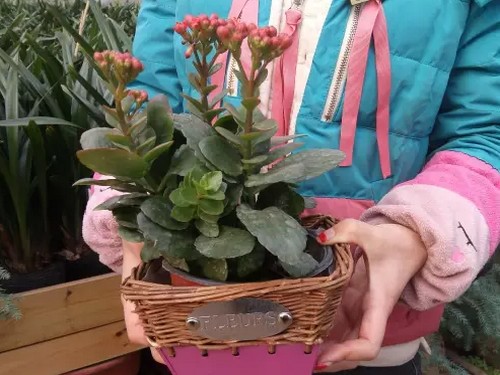
Kalanchoe is a type of succulent plant that can be grown both as a foliage plant and for its flowers. Its blooming period lasts over 4 months, which is how it got the name "longevity flower." However, some flower enthusiasts are puzzled about why their kalanchoe won't bloom. Below we'll analyze the reasons why kalanchoe doesn't bloom.
First, we know that for a plant to bloom, adequate sunlight and fertilizer are essential. Based on the author's understanding, many flower enthusiasts are used to not repotting for years. According to observation, some varieties of kalanchoe will naturally age at the root and stem after two years, and may even develop rot. Because kalanchoe propagates quite easily - through cuttings, leaf cuttings, or any easy method - we recommend that flower enthusiasts plant vigorous 1-2 year old kalanchoe.
Now let's talk about light. Kalanchoe prefers a sunny, well-lit environment. At noon in midsummer, avoid intense direct sunlight; at other times, it can be placed in a sunny spot. It needs at least 4 hours of direct light per day to grow vigorously. To ensure even blooming across the plant, regularly rotate the direction of the pot so the plant receives balanced light. On balcony settings, rotate the pot 180 degrees every half month. It can grow in semi-shade, but the stems will be thin, leaves pale, flowers sparse and colors dull - far less lush than in a sunny spot. If it's too shady, not only will it drop leaves and fail to bloom, but even a plant that has already bloomed will fade in color and then drop its flowers and wither if placed in shade.
Next, let's talk about the effect of fertilizer on kalanchoe. Kalanchoe loves fertilizer. After seedlings are potted for half a month, or after old plants are divided for half a month, apply 2 to 3 times a nitrogen-based liquid fertilizer to promote stem and leaf growth. After blooming, apply one nitrogen-based liquid fertilizer to help it recover. At other times, except for stopping fertilization in summer, only apply a nitrogen-phosphorus-potassium compound fertilizer. When fertilizing, do not get fertilizer on the leaves, otherwise the leaves will rot easily. If you accidentally get some on the leaf surface, rinse it off with water. Kalanchoe has a long blooming period, so you need to break the rule of not fertilizing during bloom. Apply a dilute nitrogen-phosphorus-potassium fertilizer or 0.2% monopotassium phosphate solution once a month so that later flowers don't become smaller and paler due to lack of nutrients.
From when kalanchoe is brought indoors at Frost's Descent until October of the following year is exactly the period of late flower bud differentiation and peak blooming, so its demand for fertilizer is very high. Before blooming, apply a phosphorus-potassium-based fish fertilizer once a week to promote flower bud differentiation. During the blooming period, mainly apply quick-acting monopotassium phosphate at a concentration of 2%, once every 10 days.
In summary, to grow kalanchoe well, you first need to understand its habits. Although kalanchoe is easy to grow, growing it well is not so easy. From watering, light, fertilizing, to pinching, every step requires careful consideration to grow a kalanchoe pot with abundant flowers and green leaves.
PS:
Many people encounter a problem when growing kalanchoe: the plant is very healthy but just won't bloom! What to do!? Here's the thing - kalanchoe is a winter short-day flowering plant. That means keeping it indoors in a bright spot all the time will affect blooming. In this case, we just need to cover it with a cardboard box from 5 PM to the next morning to promote blooming.
If conditions allow, home-grown kalanchoe should be placed outdoors for care, either continuously or intermittently. There must be at least 4 hours of direct light per day (shading at noon is best), for the plant to grow vigorously. Otherwise, long-term lack of light will cause kalanchoe to become leggy and spindly.