How to grow Asparagus densiflorus? Detailed guide to cultivation methods and precautions
Asparagus densiflorus originates from Natal, South Africa. The plant is upright and 30—60 cm tall. It is a perennial shrub-like herb in the genus Asparagus of the Liliaceae family.
Cultivation and management of Asparagus densiflorus is relatively simple. Generally, during the spring and summer growing season, fertilize once every half month, mainly with nitrogen and potassium. At ordinary times, be careful that the potting soil must not become waterlogged, otherwise it will cause root rot and yellow leaves. In autumn, watering should be gradually reduced. After 2-3 years of pot cultivation, repot in spring. Prune out dense stems and long branches to improve ventilation and light penetration. During the growing season, remove dead branches and yellow leaves at any time to keep the plant shape well-proportioned and attractive.
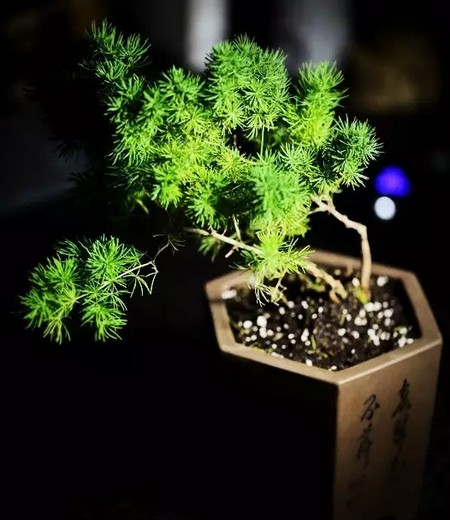
Choosing a pot: Asparagus densiflorus is best grown in a purple clay ceramic pot, but glazed ceramic pots can also be used. For newly potted cultivation, you may first use an unglazed earthen pot with good air permeability, and after the plant has established itself, transfer it into an elegant shallow purple clay pot. Except for cascade styles, which use deep cylindrical pots or relatively deep square and round pots, generally a rectangular medium-shallow pot is suitable. The shape of the pot can also be determined by the tree shape. For example, for a curved-trunk style, a drum-shaped shallow round pot can be used, and the pot color can be either purplish red or light yellow.
Soil: Asparagus densiflorus can adapt to many types of soil, but it is not tolerant of saline-alkaline soil. Deep, moist, loose, slightly acidic sandy loam is best. For pot cultivation, use matured garden soil and leaf mold, mixed with an appropriate amount of sandy soil.
Sowing: The seeds have a short lifespan, so sow immediately after collecting the seeds. The seeds are relatively large and the seed coat is hard. Before sowing, soak the seeds in clean water for 1 day. In April, sow in pots indoors. Do not cover with soil too deeply. Keep the room temperature at 20-25 degrees Celsius. They germinate 15-20 days after sowing. When the seedlings are 5 cm tall, they can be transplanted. For division, repot in spring, lift out the mother plant, separate the clumps, and divide them for planting. When cutting, try to damage the stem skin and root system as little as possible.
Planting: For potting Asparagus densiflorus, it is best to plant before budding in March. It can also be planted in autumn, but this is not good for root development. When digging up seedlings, keep the original soil. Long straight roots that have extended too far can be shortened, and dead roots should be pruned off. If planting in a shallow pot, pay attention to fixing the trunk. You can place an iron rod below the edge of the drainage hole at the bottom of the pot, tie a slightly thicker metal wire to a thicker root, thread it out through the pot hole, then wrap it around the iron rod and tie it tightly. This prevents the plant from swaying in the wind and the root system from loosening, which would affect survival.
Fertilizing: Fertilize once a month, mostly with nitrogen-potassium fertilizer or Huiyou 20-80-20 four-season high-potassium nitrate fertilizer. The frequency of fertilizing should not be too frequent. Usually, fertilizing once a month is enough, mostly with nitrogen-potassium fertilizer or Huiyou 20-80-20 four-season high-potassium nitrate fertilizer.
Watering: Spring and summer are when Asparagus densiflorus needs water most, but be careful not to let water accumulate, otherwise it will cause root rot and lead to death. It needs regular watering in appropriate amounts, and the soil must not be allowed to become too dry, otherwise the leaves will turn yellow and wither. In midsummer, high temperatures, strong light or insufficient light can also cause the leaves to turn yellow, wither and fall. After autumn, as the temperature drops, gradually reduce watering. During the spring and summer growing season, sufficient water is needed, but there must not be too much water, otherwise the root system will rot. If the potting soil is too dry, the leaves will turn yellow, causing the leaf margins to wither and yellow or the leaves to wither and fall.
Training: For shaping Asparagus densiflorus, climbing and binding can be the main method, with pruning as a supplement. Use metal wire or palm fiber for binding. The branches of Asparagus densiflorus are relatively soft, so binding with metal wire is simple and easy, and allows bending freely. For example, take 2-3-year-old young seedlings as material, bend the main trunk to a certain degree, cut off branches and stems that interfere with the shape, then bind the retained side branches into a horizontal or slightly drooping form. After one year of growth, remove the metal wire, readjust the angle, and bind again. After several years, the shape can be formed. For Asparagus densiflorus stumps collected from the wild, they can only be potted and trained after one year of root and trunk cultivation. When shaping, handle it according to the material, making full use of the natural form of the raw material, with only slight artificial binding, so that it has a natural wild charm.
Tree shapes: Asparagus densiflorus bonsai can be made into upright-trunk, slanting-trunk, curved-trunk, cascade and other styles, each with its own charm. The upright-trunk style is vigorous, tall and simple; the slanting-trunk style is elegant, vigorous and forceful; the curved-trunk style is "winding and coiling in a crouching posture, undulating like a dragon"; the cascade style resembles an ancient pine on a cliff, hanging in danger, like a green dragon stretching its head, about to dive into the four seas. After 2-3 years of pot cultivation, repotting should be carried out, and excess dense stems and long branches should be removed, which is both attractive and beneficial to growth.
Pest and disease control:
The main disease is leaf blight, which can be sprayed with 50% carbendazim wettable powder at 1000 times dilution. Pests include whiteflies and scale insects, which can be killed by spraying with 40% omethoate emulsion at 1000 times dilution.
Precautions:
Asparagus densiflorus only begins to grow when the temperature is above 15°C. 20-30°C is most suitable for its growth. When the high temperature exceeds 35°C, growth stops and the leaf clusters turn yellow. In summer, pay attention to appropriate shading to prevent direct sunlight exposure, and spray water frequently to avoid scorching or yellowing of branches and leaves.
Asparagus densiflorus likes a warm, humid and semi-shaded environment. It is relatively drought-tolerant and has strong cold resistance. It is not strict about soil requirements, and prefers sandy loam with good aeration and drainage and rich in humus. For pot cultivation, commonly use a mixture of equal parts leaf mold, garden soil and river sand as the substrate, and add a little decomposed base fertilizer when planting. Spring and summer are its peak growing seasons, requiring sufficient water, but the potting soil should not be waterlogged, so as to avoid tuberous root rot; after late autumn, gradually reduce the amount of watering, keeping the potting soil slightly moist.
Asparagus densiflorus likes a warm, humid and semi-shaded environment. It is not cold-tolerant, fears long periods of strong direct sunlight and high temperatures, and is not tolerant of drought or waterlogging. The suitable growth temperature is 20-25 degrees Celsius; in winter the temperature should not be lower than 10 degrees Celsius, and below 5 degrees Celsius it is prone to freezing damage; in summer, when the high temperature exceeds 35 degrees Celsius, growth stops and the leaf-like stems turn yellow. For cultivation, loose, fertile leaf mold is best.