How to grow potted amaryllis? Growing methods and precautions
Amaryllis growing methods are simple; in most cases you can just bury it in soil and it will flourish, and even a bare bulb forgotten in a corner can stubbornly bloom. There are a great many amaryllis varieties, in no way inferior to tulips. Amaryllis likes a warm, humid climate, and its suitable growing temperature is 18-25°C. It dislikes scorching sun, so when growing it, take care that sunlight does not shine on it directly.
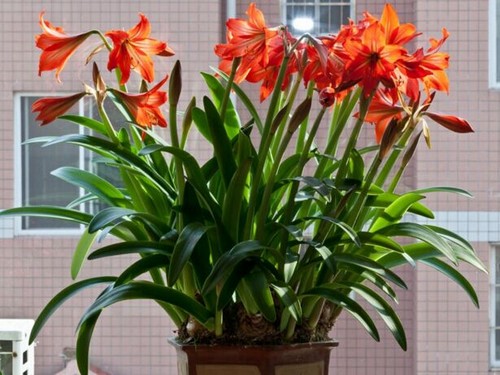
In winter amaryllis is in a dormant state and requires dryness, with a temperature of 9-12°C, and the lowest must not be below 5°C. In areas south of the Yangtze River basin, it can get through the winter with only slight protection. For potted amaryllis, the flower pot should not be too large (generally use a pot with a 16-20 cm diameter first), so as to avoid the potting soil staying wet for a long time without drying out, which causes the bulb to rot. For the potting soil, it is best to use a mix of leaf mold and sandy soil. Before planting, apply some decomposed cake fertilizer or chicken and duck manure at the bottom of the pot as a base fertilizer.
When planting, expose 1/4 to 1/3 of the bulb above the soil surface. After planting, press the potting soil firm, leave 2-3 cm of rim, and water once thoroughly. Afterwards it should not be watered much; keep the humidity low and avoid direct sunlight. Wait until the leaves grow out to about 10 cm long, then water normally and begin applying topdressing; stop fertilizing once the flower buds form (but after flowering, an appropriate amount of fertilizer may be applied to promote a plump, full bulb).
After flowering, promptly cut off the faded flower stalks so as not to divide and consume the bulb's nutrients. After autumn, watering should be gradually reduced, and the potting soil is best kept slightly dry. In winter it should be moved indoors to overwinter, and the amount of water reduced to just enough to keep the bulb from withering. Keep the temperature no lower than 5°C, otherwise it will affect dormancy and next year's flowering.
For potted amaryllis, use loose, fertile, slightly acidic leaf mold or peat soil. A flowering bulb of 24-26 cm circumference needs a 12 cm pot; in commercial cultivation an 18-20 cm pot is also used, planting 3 bulbs. The planting depth is based on exposing 1/3 of the bulb above the potting soil. Water little at first planting; when flower stalks or leaves appear, keep the potting soil moist. During the growing period, fertilize once every half month, and after the flower stalk emerges, apply a phosphorus-potassium fertilizer once more.
After flowering, continue to supply water and fertilizer to promote a robust, full bulb. In commercial production, amaryllis is often forced into cultivation: flowering bulbs pretreated at a low temperature of 5°C for 50 days, under conditions of a soil temperature of 21°C and a room temperature of 17-19°C, flower 6 weeks after planting. According to trial reports, soaking the bulb in indoleacetic acid can increase the weight and number of small bulbs. Soaking the bulb in gibberellin (GA3) can increase the bulb's weight and enlarge the flower diameter. Soaking in chlormequat (CCC) can increase the number of flowers. Spraying amaryllis leaves with indoleacetic acid, gibberellin and chlormequat can likewise increase the number of small bulbs and flowers.
If amaryllis seeds are to be collected, artificial pollination should be carried out to increase the seed-setting rate. Because amaryllis seeds are flat and extremely thin, and easily lose water and lose their germinating ability, they should be sown immediately after collection. If producing bulbs, promptly cut off the flower stalks after flowering so as not to consume the bulb's nutrients. After leaves grow out, strengthen fertilization to promote the bulb's enlargement and the production of new bulbs. Bulbs can be stored for 8-10 weeks at 13°C, and can be stored long-term at 5°C.
After flowering, note the following:
After amaryllis flowers, the above-ground part sets seed, while the underground part grows the bulb. In order to make the bulb grow plump and robust and the seeds full, at this time care should note the following:
① Fertilizing. After flowering, continue to apply liquid fertilizer 1-2 times; a compound fertilizer is best, or apply extra phosphorus and potassium fertilizer, which benefits the growth of the bulb and seeds.
② Water. Frequent watering is not needed; the substrate is best kept on the dry side.
③ After flowering, potted amaryllis should be moved to a semi-shaded, well-ventilated, cool environment for care.