What about the sensitive plant? A detailed guide to sensitive plant care
The sensitive plant (Mimosa pudica) is a fascinating plant that can predict changes in the weather. If you touch it with your hand, its leaves close up quickly, and when they open again it is very slow, which indicates that the weather will clear up; if, when you touch the sensitive plant, its leaves contract slowly and droop sluggishly, or even close slightly and then open again, this indicates that the weather will turn from clear to overcast or that it is about to rain.
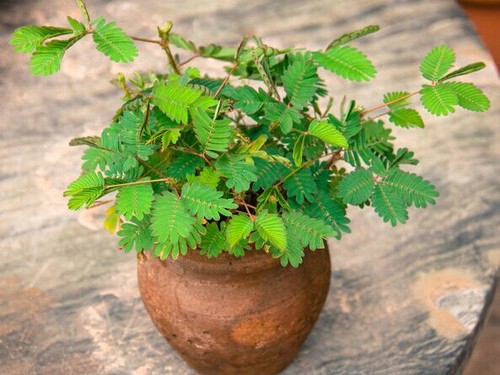
The sensitive plant is prolific yet delicate, charming and endearing, giving people an impression of daintiness and elegance. It can be planted in the ground in a courtyard corner, or grown in a pot and placed on a windowsill or a desk. Because its leaves react to heat and light, when it is touched by people its leaf stalks droop and its leaflets close, so people interpret this as "shyness," which is why it is called the sensitive plant (hanxiu cao). Today Xiao Wenzi will discuss the key points of cultivating and caring for the sensitive plant from several aspects.
Soil requirements: The sensitive plant has no strict requirements for soil. It grows better in soil that is relatively thick, loose in texture, fertile and well drained, so we can usually easily find sensitive plants in corners of the wild where trees are dense.
Those who have the conditions can use this soil mix recipe: 5 parts fine yellow sand, 3 parts garden soil and 2 parts leaf mold, sifted and mixed together, with an appropriate amount of base fertilizer added.
How to sow?
1. Before sowing, soak the seeds in warm water for 24 hours, then sow them, to make germination easier.
2. If using small flower pots, you can sow 1~2 seeds per pot, and after sowing cover with about two cm of soil.
3. After sowing, keep the soil moist, and after about two weeks you will see the seedlings come up
4. When the seedlings have grown to about 3 cm, they can be transplanted with the soil ball into the pot you like
Reminder: After watering the newly potted seedlings thoroughly, care for them first in a semi-shaded place, and once they are full of growing vigor, move them to a place with plenty of sunlight for care.
Reasons the leaves do not curl:
When there is a lack of water, the leaves will turn yellow and droop downward, and they will not close when touched. Just replenish the water, and remember to water thoroughly without letting water accumulate!
Daily pruning:
On ordinary days everyone should be a bit more diligent and cut off yellowed and withered branches and leaves. When changing pots, carefully prune the dry, aged roots, to ensure the normal growth and good looks of the sensitive plant.
Pest and disease control:
The sensitive plant has a very low chance of pests and diseases. If you find slugs, you can sprinkle some fresh lime powder in the early morning to deal with them, or just grab them and throw them away.
The sensitive plant has no special requirements for care and management. It can be cultivated in general soil, and it does not need much fertilizer during the growing period; applying diluted liquid fertilizer 2--3 times is enough. Fertilizer should not be excessive; it is enough for the leaves to be green and the growth robust. Do not let it grow leggy, because the sensitive plant is mainly a novelty foliage flower, and smaller is better. The sensitive plant's cultivation technique is simple and its management is extensive. It is not strict about climate, sunlight or soil, but fertile, loose sandy loam is best, and it likes a warm, humid environment.
With such an easy plant to care for, you have no reason not to take it home!