Cultivation Methods and Care Tips for the Happiness Tree Bonsai
Because of its auspicious name, the Happiness Tree is deeply loved for homes and office environments, especially since it has lush foliage, small emerald-green leaves and is highly ornamental. It can also absorb harmful substances in the air and has an anti-radiation effect, giving you back a healthy working and home environment. So how do you grow a Happiness Tree? How do you make its leaves emerald green and glossy? Let me explain the cultivation methods for the Happiness Tree.
First of all, the Happiness Tree likes warm, humid environments with plenty of sunlight. Of course, the Happiness Tree is also tolerant of partial shade and can grow in partial shade, and its seedlings are fairly shade-tolerant. In summer, a shade frame is also needed.
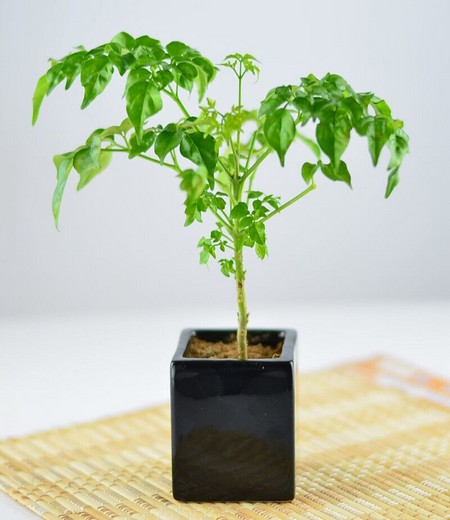
1. Substrate
For growing the Happiness Tree, choose a loose, breathable substrate with good drainage. The soil should preferably be sandy loam. The size of the pot can be decided according to the size of the final plant to be cultivated. The cultivation method currently popular on the market is 1 to 2 plants per pot, with a plant height above 70cm.
2. Temperature
The Happiness Tree likes warm, hot environments. Its optimum growing temperature is around 20 °C. When the temperature is very high (above 28°C), a shade frame should be set up appropriately, and the minimum temperature should not be lower than 5 °C, to avoid frost damage.
3. Humidity
The Happiness Tree likes moist soil and air. When growing the Happiness Tree at home and displaying it indoors, besides keeping the potting soil moist, you should also frequently spray water on the leaf surface. You can also spray the plant with slightly warm clear water to maintain its fresh, elegant appearance.
4. Light
Generally, the Happiness Tree can be grown in full sun or partial shade. However, for indoor potted Happiness Trees, try to place them by a window or on a balcony with sufficient light. A long period in a dim environment will cause leaf drop.
To grow the Happiness Tree well, knowing its nature is essential. The scientific name of the Happiness Tree is Radermachera sinica. The Happiness Tree originates from the tropical and subtropical regions of southern China. It likes high temperatures, high humidity and a sunny environment. It is tolerant of high temperatures, afraid of cold, prefers moisture and dislikes dryness. For cultivation, use loose, fertile loam and sandy loam that drains well and is rich in organic matter. The Happiness Tree is a light-loving plant and can also tolerate shade somewhat; both full sun and partial shade are acceptable. The specific methods are described below:
Temperature: The Happiness Tree likes warm, hot environments. Its optimum growing temperature is 20°C-21°C during the day and 18°C-19°C at night. In midsummer, try to keep the temperature below 27°C. When the ambient temperature is very high, set up a shade frame appropriately to increase the humidity of the environment and the leaf surface. During overwintering, it is best to maintain a greenhouse temperature of no less than 8°C, and never lower than 5°C, to avoid frost damage, damaged leaves or leaf drop.
Light: The Happiness Tree is a light-loving plant and can also tolerate shade somewhat; both full sun and partial shade are acceptable. However, the maximum light intensity should not exceed 400001ux. In summer, a shade frame is needed. When potted plants are placed indoors, it is best to place them by a window or on a balcony with sufficient light. If placed in a dim indoor spot for a long time, leaf drop is likely. When growing potted plants at home, during overwintering you can place them by a window or in a higher spot in front of a balcony so they receive more light.
Humidity: The Happiness Tree likes relatively moist soil and growing conditions. Air humidity should generally be kept between 70%-80%, and should not exceed 85%. If kept at home, you can frequently spray the plant with slightly warm clear water to maintain its fresh, elegant appearance and also increase the ambient humidity.
Pest and disease control:
Leaf spot: In environments with high temperature, high humidity and poor ventilation, its leaves are prone to leaf spot infection.
Control method: Improve ventilation and light penetration, and avoid water standing on the leaf surface for long periods. When a small number of diseased leaves are found, promptly remove and burn them, and regularly spray 50% carbendazim wettable powder at 600 times dilution, once every half month, for 3-4 times in a row. For home potted plants, for spots appearing on a small number of leaves of individual plants, you can apply Dakinlin cream ointment.
Scale insects: Under conditions of high temperature, high humidity and poor ventilation, especially when kept in a greenhouse for a long time in autumn and winter, scale insects are prone to appear on the stems and leaves of the Happiness Tree.
Control method: Improve ventilation and light penetration, and pay attention to controlling environmental humidity. When a small number of live insects are found, promptly wipe them off with a damp cloth, or remove them with clear adhesive tape. In commercial cultivation, during the peak hatching period of the nymphs, spray with 25% buprofezin wettable powder at 1500 times dilution.
Mites: The main damage symptoms are new leaves becoming wrinkled and curled, with an uneven leaf surface. They generally occur from June to September. High temperature and dryness favor massive outbreaks of this pest, while under relatively humid conditions the pest occurs less. Mainly use acaricides such as pyridaben and hexythiazox.
Aphids: The most common aphid is the green peach aphid. Symptoms include wrinkled and deformed leaves, usually along with glistening honeydew spots. Aphids can be seen with the naked eye.
Control method: Spray with zinc sulfur phosphorus, omethoate, deltamethrin, etc.