How to grow a peace lily in a pot? Detailed guide to cultivation methods and precautions
The peace lily began to be used as a potted ornamental plant in the early 20th century, and by the 1980s it was very popular in Europe, where Spathiphyllum was regarded as the flower of purity, carrying the meaning of purity, calm, peace and tranquility. The peace lily's flowers are spotless white, bringing a sense of serenity and harmony, so folk tradition holds that the peace lily symbolizes good fortune and wishes coming true, and because of the beauty of its flower shape it is aptly named "smooth sailing"; it is often used for indoor beautification and greenery decoration, mostly grown in pots. Simply keeping one for viewing is harmless, as long as you do not eat it.
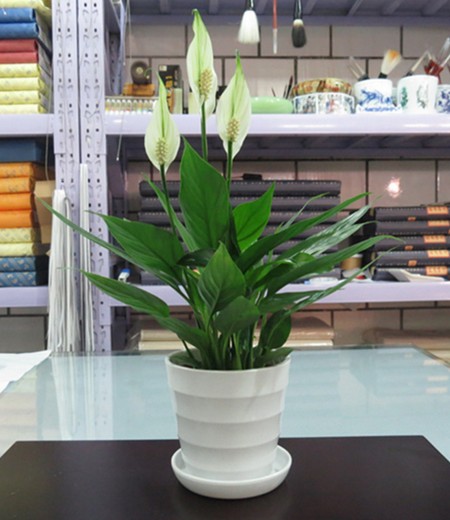
The peace lily is a plant very popular in modern homes. It not only brings fresh air to the household but also improves the feng shui. The peace lily has relatively high requirements for soil and temperature, so it is not easy to grow. Below, let's share the cultivation methods and precautions for the peace lily:
[Cultivation methods]
Substrate selection: The peace lily needs loose, well-drained and well-aerated potting soil. Before obtaining high-quality seedlings, prepare the growing substrate. The substrate can be ordinary Northeast peat or imported German peat, but either must have 15%-20% perlite added and be mixed evenly; choose large-grained perlite and be careful not to crush the perlite. The prepared substrate should have an EC value of around 0.7 mS/cm and a pH value maintained at around 5.5.
Potted peace lilies require loose soil with good drainage and aeration, and heavy clay soil must not be used. Generally, leaf mold and peat soil mixed with a small amount of perlite can be used to make the substrate; when planting, add a small amount of organic fertilizer as a base fertilizer. Because it grows quickly and has a relatively high fertilizer requirement, liquid fertilizer must be applied once every 1-2 weeks during the growing season; at the same time, provide sufficient water and keep the potting soil moist at all times. During high temperatures, water should also be sprayed on the leaves and the ground to increase air humidity. If the surrounding environment is too dry, new leaves will become smaller and turn yellow, and in severe cases will wither, yellow and drop off.
Light control: The peace lily is relatively shade-tolerant. When light intensity exceeds 250 w/m2, the peace lily must be shaded. In northern regions, 65%-85% of sunlight can be blocked in summer; direct strong light is taboo, otherwise the leaves will turn yellow, and in severe cases sunscald will occur. The peace lily is fairly shade-tolerant, and about 60% scattered light is enough to meet its growth needs, so it can be grown year-round indoors in a spot with bright scattered light. In summer, 60%-70% of sunlight can be blocked; direct strong light is taboo, otherwise the leaves will turn yellow, and in severe cases sunscald will occur. In northern winter greenhouse cultivation, no shading or only slight shading is needed. If the light is too dim for a long time, it will be difficult for it to bloom.
Temperature control: The peace lily is a heat-loving species and should be cultivated in a high-temperature greenhouse. The most suitable daytime and nighttime temperatures for the peace lily are 20°C-21°C, and the maximum should not exceed 24°C. If the daytime temperature is relatively high, the nighttime temperature can be appropriately lowered as compensation. For example, if the daytime temperature is 27°C for 6 hours, then at night the temperature should be kept at 9°C for 6 hours. Other situations follow the same pattern. Pay special attention that if the peace lily is kept at low temperature for a long time, it is prone to leaf drop or a scorched-yellow appearance.
Humidity control: The most suitable relative humidity for peace lily growth is 75%-85%. Water should often be sprayed on the leaves with a fine-nozzle sprayer, and water should also be sprinkled on the ground around the plant to keep the air moist, which is very beneficial to its growth and development. When the climate is dry and air humidity is low, new leaves will become smaller and yellow, and in severe cases will wither, yellow and drop off. If nighttime humidity is greater than 80%, be sure to raise the greenhouse temperature by 1°C-2°C 1 hour before sunrise and maintain it until 2 hours after sunrise to avoid infection by pathogens.
The peace lily is a heat-loving species and should be cultivated in a high-temperature greenhouse. In winter, the minimum nighttime temperature should be 14-16°C, and the daytime temperature should be around 25°C. Long-term low temperature easily causes leaf drop or a scorched-yellow appearance. During the growing period, the potting soil should be kept moist at all times, but avoid overwatering and long-term soggy potting soil, otherwise root rot and plant yellowing are likely.
Water management: The peace lily likes a moist environment. The substrate must always be kept moist; do not wait until the substrate is completely dry before watering. The "water when dry, stop when wet" moisture management method is not suitable for the peace lily, and it also increases the chance of root infection, which is bad for growth. The best watering method is overhead spraying, but the seedling bed must have good drainage. The EC value of the spray water should not exceed 0.8 mS/cm at most, otherwise it is unfavorable for crop growth.
In summer and dry seasons, water should often be sprayed on the leaves with a fine-nozzle sprayer, and water should also be sprinkled on the ground around the plant to keep the air moist, which is very beneficial to its growth and development. When the climate is dry and air humidity is low, new leaves will become smaller and yellow, and in severe cases will wither, yellow and drop off. In winter, watering should be controlled, and the potting soil should preferably be slightly moist.
Fertilization management: Because the peace lily has relatively many tillers, it can be fertilized more. During the vegetative growth stage, the N to K ratio of the nutrient solution sprayed is 2 to 1; during the reproductive growth stage, the N to K ratio of the nutrient solution sprayed is 1.5 to 1, which can make the reproductive growth of the peace lily dominant and promote flowering
[Precautions]
1. Improper light. The peace lily needs relatively good light in winter and early spring and should not be kept in shade; when light gradually intensifies, shade it gradually. If it has been enjoyed in a shaded place, do not directly place it in the sun to bake, otherwise it will become uncomfortable due to the sudden change in environment, showing wilting, yellow leaves, or even death.
2. Unsuitable temperature. This generally does not happen at this time and mostly occurs when the temperature is below 5°C or above 35°C.
3. Humidity: The peace lily needs relatively high growing humidity. If the air is too dry, it will cause leaf wilting, which can be solved by increasing spraying or sprinkling water on the ground around it. Covering it with a transparent plastic bag also works, but when the light is relatively good, ventilate it slightly or open a hole at the top of the plastic bag for ventilation, otherwise the temperature inside the bag will rise sharply.
4. Improper fertilization. Fertilize with thin fertilizer; do not apply concentrated fertilizer or raw fertilizer, and after applying solid fertilizer, water once with clear water. It is best to use dilute fertilizer water instead of clear water for watering, so that fertilizer damage generally will not occur, and the plant will grow luxuriantly.
5. Pests. If harmful mites cause damage, the leaves will show adverse symptoms such as wilting, faded gloss and yellow withering. Miticide-specific pesticides can be sprayed for control, such as dicofol, hexythiazox, pyridaben, etc.