Detailed Guide to Oleander Cultivation Methods and Precautions
Flowers and plants serve to beautify, fragrance, and purify the environment. Tending a few pots of plants indoors not only decorates the home and lets you admire the brilliance of the blooms, but also effectively purifies indoor air, keeping it fresh and natural, which benefits both body and mind. However, if you do not pay attention to the various taboos of keeping flowers indoors, it can also harm your health. What everyone needs to note is that oleander is a toxic plant, generally planted in courtyards, along roadsides, and similar places, though some are also grown indoors, but it is rather dangerous to human health, so everyone should be careful.
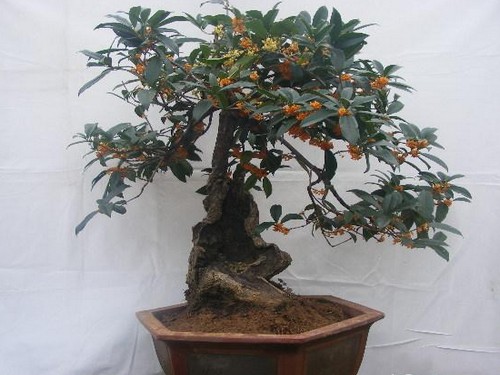
In summer, the season when few flowers bloom, oleander flowers for nearly 4 months, making it a rare summer-flowering tree species; it can be planted on either side of buildings, in parks, green spaces, roadsides, poolside areas, and other locations, and is even more suitable for planting in industrial and mining areas and along railway lines for pollution resistance. Its stems and leaves are toxic, so care must be taken when pruning and taking cuttings.
Propagation methods:
Cuttings are the main method, though division and layering can also be used. Cuttings can be taken in both spring and summer. Soak the base of the cuttings in clean water for about 10 days, keeping the water fresh, so that the cuttings root earlier after planting and the survival rate is also high. The specific method is: cut 1- to 2-year-old branches taken in spring into stem segments 15 cm to 20 cm long, tie about 20 of them into a bundle, soak them in clean water with the submerged depth at 1/3 of the stem segment, change the water at the same temperature once every 1 to 2 days, keep the temperature at 20°C to 25°C, and once adventitious roots are found growing at the submerged part, they can be planted as cuttings. When planting cuttings, make holes in the cutting medium with a bamboo chopstick to avoid damaging the adventitious roots.
Because the base of old oleander stems has a very strong sprouting ability, often sending out large numbers of tender shoots, these branches can be fully used for summer softwood cuttings. Select semi-lignified cuttings, keep the top 3 small leaves, insert them into the substrate, and pay attention to timely shading and water management; the survival rate is also very high. For layering propagation, first notch or ring-bark the part to be buried, bury it in soil, and after about 2 months it can be cut away from the parent plant, then transplanted with soil the following year.
Cultivation techniques:
Oleander has strong adaptability, and cultivation and management are relatively easy; whether planted in the ground or in pots, it is fairly low-maintenance. In ground-planted locations, transplanting should be done in spring, and heavy pruning should be carried out at transplanting. Pay attention to protection in winter. The branches and leaves are easily harmed by scale insects, so attention should be paid to control.
For potted oleander, besides requiring good drainage, it also needs sufficient fertility. In spring, shaping and pruning are needed when new growth emerges; for leggy branches and weak slender branches in the plant, they can be cut off from the base, and for overly dense inner branches, part of them should also be thinned out, so that the branches are evenly distributed and the tree shape remains full. After 1 to 2 years, repot once, and repotting should be done after pruning. Summer is the period of vigorous growth and flowering for oleander, and it needs a lot of water; besides watering once each morning and evening every day, if the potting soil is seen to be too dry, an additional misting should be given to prevent tender branches from wilting and to avoid affecting flower longevity. After September, water should be withheld to inhibit continued growth of the plant, allow the branch tissues to mature, and increase nutrient accumulation, so as to help it overwinter safely. The overwintering temperature needs to be maintained at 8°C to 10°C; below 0°C, it will drop its leaves.
Oleander is a fertilizer-loving plant; for potted plants, besides applying sufficient base fertilizer, a supplementary fertilizer should be applied once a month during the growing season.
Care methods:
1. Light: Oleander likes sunlight, so during the growing period it needs to be kept in a sunny place; otherwise it will produce fewer flowers and duller colors.
2. Temperature: Oleander should be planted in a sheltered, sunny spot; in winter, move it indoors to prevent freezing, and a room temperature not lower than 0°C is sufficient. If the temperature is too high, it consumes nutrients, which is unfavorable for growth and flowering the following year. Where outdoor temperatures are high in winter, soil can be mounded up around it to protect against the cold.
3. Watering: Although oleander likes water, it fears waterlogging; during continuous rainy days, promptly pour out accumulated water in the pot to prevent root rot. Too much watering will cause the leaves to turn yellow and fall off one after another, affecting flowering the next year. In spring and autumn, water according to the principle of watering when dry and stopping when wet, keeping the potting soil moist as appropriate. Summer is exactly the period of vigorous growth and flowering for oleander, so it needs more water; it is best to water once each morning and evening every day, and pay attention to frequently spraying and washing the branches and leaves to keep the leaf surface fresh and emerald green. Move it indoors in mid-October; after bringing it indoors, watering should be controlled, and by no means should the amount of water be too large, otherwise it is prone to root rot and leaf drop, affecting growth the following year.
4. Fertilizing: Oleander likes fertilizer; from the time it is moved outdoors until the flowers fade (First Frost), apply a dilute liquid fertilizer once about every 20 days. After the Beginning of Autumn, oleander grows rapidly; at this time, apply fertilizer water once about every 15 days until just before it is moved indoors.
5. Pruning: If oleander is left unpruned, the plant shape becomes too large, so when cultivating it in a clumping form, the branches or trunk should be regulated. Oleander has strong sprouting ability; if it is cut in the middle of a branch, many small branches will emerge from the cut, affecting the plant shape, so in principle, when pruning, it must be cut off at the base of the branch.
6. Pests and diseases: Brown spot is an important disease on oleander; in the early stage of onset, spray 50% benomyl wettable powder at 1000 times dilution, or 25% carbendazim wettable powder at 600 times dilution, or 36% thiophanate-methyl suspension concentrate at 500 times dilution.
Precautions:
Oleander has strong adaptability, and cultivation and management are relatively easy; whether planted in the ground or in pots, it is fairly low-maintenance. Oleander is a fertilizer-loving plant; for potted plants, besides applying sufficient base fertilizer, in ground-planted locations, a supplementary fertilizer should be applied once a month during the growing season. Transplanting should be done in spring, and heavy pruning should be carried out at transplanting. Pay attention to protection in winter. The branches and leaves are easily harmed by scale insects, so attention should be paid to control.
For potted oleander, besides requiring good drainage, it also needs sufficient fertility. In spring, shaping and pruning are needed when new growth emerges; for leggy branches and weak slender branches in the plant, they can be cut off from the base, and for overly dense inner branches, part of them should also be thinned out, so that the branches are evenly distributed and the tree shape remains full. After 1 to 2 years, repot once, and repotting should be done after pruning.
Summer is the period of vigorous growth and flowering for oleander, and it needs a lot of water; besides watering once each morning and evening every day, if the potting soil is seen to be too dry, an additional misting should be given to prevent tender branches from wilting and to avoid affecting flower longevity. After September, water should be withheld to inhibit continued growth of the plant, allow the branch tissues to mature, and increase nutrient accumulation, so as to help it overwinter safely. The overwintering temperature needs to be maintained at 8 to 10 degrees; below 0 degrees, it will drop its leaves.