How to care for Phalaenopsis orchids during the flowering period? Home potted care tips
In the process of growing Phalaenopsis orchids at home, bud drop and even plant death are common phenomena. In fact, Phalaenopsis is not a "short-lived" plant; paying attention to a few care details can extend the flowering period.
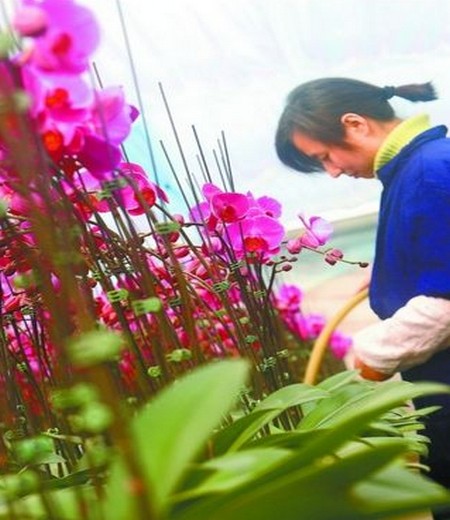
Bud drop in Phalaenopsis is widespread. Of course, some cases are caused by technical problems in tissue culture growth, environmental pollution, mechanical damage and other reasons, but care practices also require great attention, such as pest infestation, overly wet medium, poor ventilation and so on. With proper care, Phalaenopsis can have a relatively long flowering period.
When Phalaenopsis suffers pest infestation, such as mite damage, it shows sudden water loss in the buds, which turn dark red, and in severe cases all the buds drop off. An overly wet medium reduces the oxygen content inside the root system, seriously affecting bud development, so the flowers open small and lusterless or the buds drop. Conversely, a dry medium is favorable for brightly colored flowers.
At the same time, attention must also be paid to relative air humidity. If the humidity is too low, it easily causes buds to wilt and drop, and has a considerable effect on both flower size and color. If relative humidity falls to a certain level, the pollen grains of the flowers will drop off naturally and the flowers will wilt.
In addition, attention must be paid to the light and ventilation conditions of Phalaenopsis. Insufficient light leads to insufficient photosynthesis, which speeds up and increases the nutrient consumption of respiration, making the flowering period of Phalaenopsis short and bud drop severe. Improving ventilation also allows fresh oxygen and carbon dioxide to enter the room, strengthening photosynthesis and extending the flowering period.
When growing Phalaenopsis indoors, due to factors such as temperature and humidity, the leaves of the orchid plant grow only 1-2 leaves in a year's time. Because of the limitations of temperature and humidity in home cultivation of Phalaenopsis, the flower buds grow singly at the top, with the flower bud growing between two leaves. When the orchid plant produces a flower bud, keep the indoor temperature at 18°C to 20°C, and after about 120 more days of care, the Phalaenopsis will bloom. You can set up a support in the pot in advance for the flower stem that is about to emerge, to prevent the flower stem from falling over.
During the growth of the flower stem, it needs to be secured several times to prevent the stem from breaking. Once every flower bud in the pot has developed well, do not change the orientation of the pot anymore, so that the Phalaenopsis flowers do not bloom unevenly and spoil the display. During the flowering period, which lasts as long as 4 months, keep the room ventilated and maintain the temperature between 15-18°C.
The peak flowering period is around the Spring Festival. A moderate temperature reduction can extend the viewing time. When in bloom, the nighttime temperature is best kept between 13°C-16°C, but must not fall below 13°C. During the flowering period, watch out for gray leaf spot, mainly caused by not paying attention to water droplets on the petals, or other diseases, which detract from the ornamental value of the flowers. Therefore, never spray fertilizer water onto the petals.
Post-bloom care: the flowering period is generally around the Spring Festival, and the viewing period can last as long as 2 to 3 months.
After the flowers wither, the faded flowers must be cut off as early as possible, as this can reduce nutrient consumption. If the flower stem is cut from the base at the 4th to 5th node, it can bloom again after 2 to 3 months. But this consumes too much of the plant's nutrients and is unfavorable for growth in the coming year. If you want it to produce good flowers again the next year, it is best to cut the flower stem off from the base. When the medium ages, it should be replaced in good time, otherwise air permeability deteriorates, causing root rot and weakening the plant's growth or even killing it. Generally, repotting in May, when new leaves grow out, is preferable.