How to grow potted Phalaenopsis orchids? A detailed guide to cultivation methods
Phalaenopsis orchids are named for their graceful bearing and flowers shaped like butterflies, and they are widely cultivated in countries around the world. Phalaenopsis is a treasure among tropical orchids, deeply loved by refined enthusiasts. To grow gorgeous, graceful Phalaenopsis orchids, mastering the cultivation methods and precautions is essential. Phalaenopsis orchids have elegant flowers and splendid colors, and enjoy the reputation of “Queen of Orchids.” How do you grow Phalaenopsis orchids with their elegant and varied flower colors? Let us learn about the cultivation methods and precautions for Phalaenopsis orchids together!
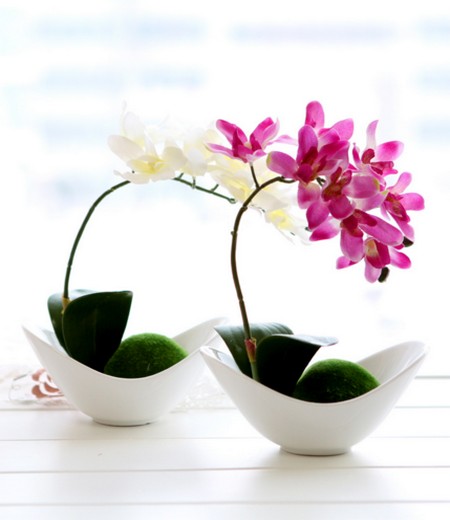
Tips for growing Phalaenopsis orchids well? To grow gorgeous, graceful Phalaenopsis orchids, mastering the tips for growing them well is essential. Growing Phalaenopsis orchids well requires attention to several aspects including temperature, light, water, fertilizing and repotting……
1. Temperature
Phalaenopsis is native to tropical regions and likes a high-temperature, high-humidity environment, with a suitable growing temperature of 16°C to 30°C. During the growing period, the minimum temperature should be kept above 16°C, and the optimal growing temperature is 20-30%. When it exceeds 35°C in summer or drops below 10°C in winter, its growth will be inhibited. Around the Spring Festival is the peak flowering period; a moderate drop in temperature can extend the viewing time, but it must not go below 13°C. When summer temperatures are on the high side, cooling is needed, and attention should be paid to ventilation. If the temperature is above 32°C, Phalaenopsis usually enters a semi-dormant state, so continuous high temperatures should be avoided.
2. Light
Phalaenopsis needs little light, about 1/3 to 1/2 of the light required by ordinary orchids, and direct strong light must be strictly avoided. If it is grown on an indoor windowsill, use a window screen to shade part of the sunlight: 80% shading in summer, 60% shading in autumn, and 40% shading in winter. Before and after the flowering period, appropriate light can promote flowering in Phalaenopsis and make the flowers more brilliant and longer lasting.
3. Water
In its place of origin, Phalaenopsis mostly grows attached to tree trunks, with its roots exposed to the air, and it can absorb water from the moist air; air humidity should be kept at 70%. When cultivated artificially, the roots are buried in the growing medium. If watered too much, the medium's aeration will worsen, the fleshy roots will rot, the leaves will turn yellow and fall off, and in severe cases the plant will die. The principle for watering: water when dry, and water thoroughly when watering. When indoor air is dry, you can use a sprayer or watering can to mist the leaf surfaces, but note that during the flowering period, water mist must not be sprayed onto the flowers, to avoid flower and bud drop.
4. Fertilizing
For cultivating Phalaenopsis, sphagnum moss and moss are generally chosen as the growing medium. The principle for fertilizing should be to fertilize less and use dilute fertilizer. During normal growth, apply a 2000-fold dilution of orchid-specific fertilizer as a root feed, once every 2-3 weeks depending on growth conditions. Before flowering, you can choose a compound flower fertilizer based mainly on water-soluble high-phosphorus and high-potassium fertilizer at a 1000-2000-fold dilution, sprayed once about every 10 days. Stop fertilizing during the flowering period and in seasons with lower temperatures.
5. Repotting
It takes about 2 years from seedling to flowering. Mature Phalaenopsis plants should be repotted and given fresh growing medium after flowering each spring; otherwise, dirt and moss tend to accumulate, and the growing medium easily decays, breeding pests and diseases. For potted Phalaenopsis, use a porous, breathable unglazed clay pot. When planting, the growing medium placed at the bottom of the pot should account for at least 1/2 of the pot's capacity, and part of the roots should be left exposed at the pot surface. Never bury them completely and deeply, otherwise breathing and growth will be hindered.
6. Ventilation
The normal growth of Phalaenopsis requires circulating fresh air, so home-grown Phalaenopsis must have good ventilation, especially during the high-humidity period in summer. Good ventilation must be used to prevent heat stress, and it can also help avoid infection by pests and diseases.
Precautions:
1. Watering too frequently: Friends who grow Phalaenopsis always worry that the orchid lacks water, and regardless of whether the growing medium is dry, they water it every day, causing severe root rot.
2. Temperature too low: The flowering plants of Phalaenopsis usually come on the market mostly in early spring, and after being bought and taken home they are generally placed in places such as the living room for viewing. Although the daytime temperature in these places is sufficient, the nighttime temperature is somewhat on the low side. On the other hand, professionally cultivated orchids are mostly kept in well-equipped greenhouses. By comparison, the temperature and humidity at home are somewhat insufficient, causing the plant's growth to gradually weaken day by day. Therefore, sometimes no matter how well it is cared for, the orchid still may not bloom.
3. Over-fertilizing: Fertilizing whenever fertilizer is available, without paying attention to concentration, thinking that fertilizing will make it grow faster. You should know that Phalaenopsis should be given light fertilizer, in small amounts and more frequently. Remember that “tonic feeding” must not be excessive, otherwise it will backfire.
4. Planting a small plant in a large pot: Thinking that using a large pot can give the Phalaenopsis a roomier environment and plenty of medium. In fact, after using a large pot, the sphagnum moss does not dry easily. You should know that Phalaenopsis likes aeration, and when air circulates freely, it thrives.
5. Dry, shriveled buds: Most Phalaenopsis on the market today have been forced into flower. After leaving the production base, once the environment changes, dry bud problems easily appear. At this time, do not assume it is dryness and do not water more; instead, increase indoor humidity and control the indoor temperature, which must not be too high. When buying flowers, try to choose ones with thick petals.