How to grow potted Cymbidium orchids? Master these care tips
Cymbidium orchids have long, elegant blue-green leaves, full and gorgeous blooms, and large, imposing flowers that stand tall and proud. Each plant often produces two or three flower stems, and when in full bloom they look like clustered brocade and piled embroidery, enhancing each other's beauty, magnificent and spectacular, with an extraordinary presence. Large plants are mostly used for cut flower cultivation, while small and medium-sized plants are mostly used as potted plants, suitable for decorating living rooms, windowsills and other places. So, how should Cymbidium orchids be grown?
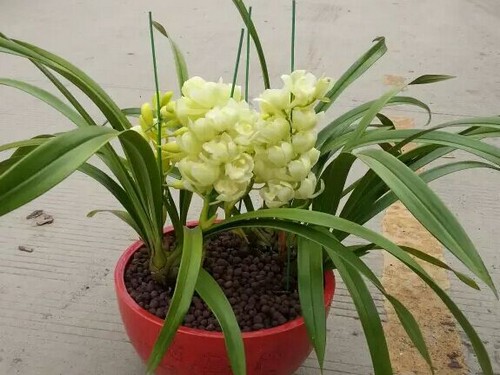
Temperature: The optimal growing temperature for Cymbidium orchids is 15-27°C. The overwintering temperature must not be lower than 10°C, and in summer it must not be higher than 29.5°C. How to grow Cymbidium orchids: during the flower bud differentiation period, that is, in summer and autumn, there must be a clear difference between day and night temperatures for the flower buds to differentiate. Once the flower buds have sprouted, the nighttime temperature must not exceed 14°C, otherwise the flower buds are prone to withering prematurely.
Choice of substrate and pot: It is advisable to choose a tall cylindrical pot with many holes at the bottom and on all four sides. The growing substrate should be tree bark chunks or fern roots with good air permeability and water permeability. Charcoal, ceramsite and similar materials should be added to the lower part of the pot to facilitate drainage.
Fertilizing and watering: After division and planting, do not water immediately. If dryness is observed, spray water on the leaves and the pot surface to prevent the leaves from drying out, falling off, and the pseudobulbs from shrinking. Water only after new shoots and new roots have grown. During cultivation, watering should depend on the weather and the wet-dry conditions. During the vigorous growth period, sufficient water must be supplied. In dry and hot seasons, water promptly. When winter temperatures are low, the frequency of watering can be reduced. The pH of the water used for watering is best at 6.5. Cymbidium orchids are relatively fond of fertilizer. After new shoots grow in spring, apply a compound fertilizer mainly composed of nitrogen at a concentration of 0.1%-0.2%, once a week. Or use decomposed dilute cake fertilizer water. During the bud gestation period, additional quick-acting phosphorus and potassium fertilizers should be applied in advance.
Light and ventilation: Direct sunlight is taboo; sufficient scattered light is needed. Under strong summer light, about 50% shading is required. In autumn, sunlight can be slightly more - this is beneficial for flower bud formation and overwintering. In winter, it can be placed in a greenhouse with light. In areas of southern China with strong sunshine and high temperatures, it should be cultivated under a shade canopy year-round. To facilitate ventilation, it should be placed on a raised shelf and not too densely arranged.
As a general rule, when the plant becomes too large, it should be repotted or divided and potted to promote growth and flowering. The time for potting or repotting is best after flowering or in early spring when new shoots have just sprouted. Before repotting, the plant should be taken out of the old pot, rotten roots and yellow leaves trimmed off, and the old substrate cleared away. Then place a layer of broken tiles or broken bricks at the bottom of the new pot to facilitate drainage and aeration, put the plant into the pot, fill in new substrate, press down firmly with hands, and water thoroughly.
For the potting soil, use loose, breathable humus soil formed from decomposed bamboo leaves in bamboo groves, or slightly acidic mountain soil. It must be exposed to the sun for 5-6 days in summer before use. When potting, plant the seedling in the center of the pot, spread the root system evenly around the pot, then fill the pot with potting soil. After planting, do not water immediately (if dryness is observed, spray water on the pot surface to prevent the pseudobulbs from shrinking). Place in a bright, scattered-light spot indoors. Under strong summer light, about 50% shading is needed; direct sunlight is taboo. In autumn, more sunlight is fine; in winter, place in a spot indoors with ample sunlight.
Watering during the growing period: Spring is the season of vigorous growth, so sufficient water must be supplied, keeping the potting soil moist and the air humidity relatively high. Spray water on the ground and around the pot, and mist the leaves. In summer, water promptly. During the flower bud formation period and bud gestation period, the potting soil should be on the dry side; moisture is taboo. Autumn is a relative dormancy period during flower bud formation. Watering should be reduced. This is beneficial for flower bud differentiation.
In winter, when the flower buds are elongating, a certain amount of water supply is needed, and the air must have a certain humidity; otherwise, the flower buds are prone to turning yellow and withering, and cannot bloom. Note that when watering, never pour water into the leaf axils or on the flowers, and at the same time prevent water accumulation in the potting soil. After new shoots grow in spring, apply a compound fertilizer mainly composed of nitrogen at a concentration of 0.1%-0.2%, or decomposed dilute cake fertilizer water, once every 7-10 days. During flower bud differentiation and bud gestation, apply a liquid fertilizer mainly composed of phosphorus and potassium once every 7 days. Stop fertilizing during the midsummer season and the dormancy period. Normally, the daytime temperature is 25°C, and the nighttime temperature is best at 10°C. If the nighttime temperature is higher than 20°C, it will cause the flower buds to wither or affect flowering. In winter, the room temperature must not be lower than 10°C.