How to grow Madagascar periwinkle (Catharanthus roseus)? A detailed guide to cultivation techniques
Madagascar periwinkle has a long flowering period, bright colors, and a graceful form, and with the development of modern technology, the varieties people have bred are becoming more and more beautiful. It is very suitable as an indoor potted ornamental plant, and keeping one at home may have unexpected effects. So how do you grow Madagascar periwinkle well? Next, let's take a look at the editor's introduction to Madagascar periwinkle cultivation techniques.
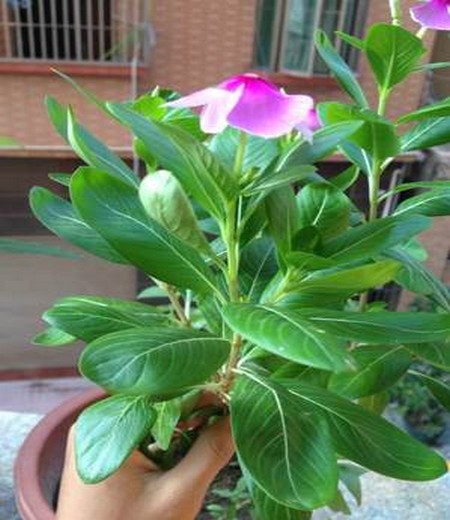
1. Propagation: Madagascar periwinkle is mostly grown from seed, but it can also be propagated by cuttings, though the growth is not as good as from seed. The seeds of Madagascar periwinkle should be collected as they ripen, and the suitable germination temperature is 20-25°C. Sowing is best done between March and May, and it is mostly grown as an annual. Cuttings are mostly taken from April to July, but this method is usually not used.
2. Soil: Madagascar periwinkle grows best in fertile, loose, well-drained sandy soil or soil rich in humus. It tolerates poor soil, but most of all it dislikes saline-alkaline land. Compacted clay soil with poor air permeability easily causes poor plant growth, yellowing leaves, and no flowering. It is naturally tough and not strict about soil, so ordinary garden soil is suitable, but saline-alkaline soil should be avoided; well-ventilated sandy soil or soil rich in humus is best.
3. Sunlight: Madagascar periwinkle is a light-loving plant, and during the growing period it must be guaranteed sufficient sunlight so that its leaves are lush and glossy and its flowers are brightly colored. If Madagascar periwinkle is always kept in a shady place, it is prone to pests and diseases, with leaves turning yellow and dropping. It likes sufficient light; if light is insufficient, it tends to grow leggy, which affects flowering and reduces its ornamental value.
4. Temperature: Madagascar periwinkle likes heat but is not cold-tolerant. The suitable growing temperature is between 20-30°C; if it stays below 15°C for a long time, growth slows or even stops, and dormancy occurs. Below 5°C it is prone to cold damage. During the growing period it likes a warm environment. From March to July, the most suitable temperature for growth is 18-24°C, and from September to the following March, a suitable temperature is 13-18°C. In winter, the temperature must not be lower than 10°C, so as to avoid the plant freezing and dying.
5. Watering: Madagascar periwinkle dislikes dampness and fears waterlogging, so it should not be watered too much; water accumulation easily causes root rot, which then affects growth. When overwintering indoors, watering should be controlled even more strictly, and it is best kept dry, otherwise it is prone to freezing. If grown in the open field, attention should be paid to drainage during midsummer showers to avoid death from water accumulation. Check the surface soil and water alternately dry and wet, and water thoroughly when watering; for example, in summer when the temperature is high and growth is fast, water once every 2-3 days; in spring and autumn when growth is slow, water once every 5-7 days. In winter it is basically dormant, so water once every half a month.
6. Fertilizing: Madagascar periwinkle is not strict about fertilizer requirements, and fertilizing about once every ten days during the growing period is enough. Compound fertilizer and liquid fertilizer can be applied alternately. Potted Madagascar periwinkle needs a layer of base fertilizer at the bottom of the pot to ensure the plant has enough nutrients for growth. Fertilizer rich in phosphorus and potassium is suitable, such as the major fertilizer king used for ornamental herbaceous flowers, and it is suitable for use during the growing period and flowering period.
7. Pruning: Madagascar periwinkle is a perennial herbaceous plant and is quite suitable for potting, but when potted, attention should be paid to pruning. The plant should not be allowed to grow too tall, as this affects its decorative and ornamental effect. Usually, after the potted plant has established, pinching should be done several times to make it branch more and bloom more, and after flowering, the spent flowers must also be cut off. It can be used during the peak growing period, suitable for spring, summer, and autumn; mainly cut off diseased and pest-damaged branches and weak thin branches; leggy leafy branches can be shortened. To promote branching, pinch after a single plant has 5-10 leaves. Throughout the whole growth period, pinching can be done multiple times until the plant shape is satisfactory.
8. Pests and diseases: The plant is vigorous and rarely suffers from pests and diseases. Madagascar periwinkle itself is toxic, so it is relatively resistant to pests and diseases. The main problems include damping-off at the seedling stage, gray mold, and pests such as red spider mites, aphids, and tea moths. During cultivation, pay attention to ventilation and air permeability, drainage and loosening the soil, and do not let it get rained on. If pests or diseases have already occurred, measures should be taken promptly to reduce or eliminate the damage. It has strong disease resistance and is not prone to pest infestation. If there are bacterial diseases, carbendazim or chlorothalonil 1000-times aqueous solution can be used for control, and 65% zineb 600-times solution can also be used for treatment.