What are the cultivation methods and precautions for potted clematis?
Many flower lovers are captivated by the beauty of clematis and want to grow it, but they don't know whether clematis is easy to grow. If one had to rate the difficulty of growing clematis, the editor thinks the difficulty is medium, because it is not as tough as spider plants, but it is also not the kind of very fussy flower, so if you want to grow clematis, flower lovers can give it a try.
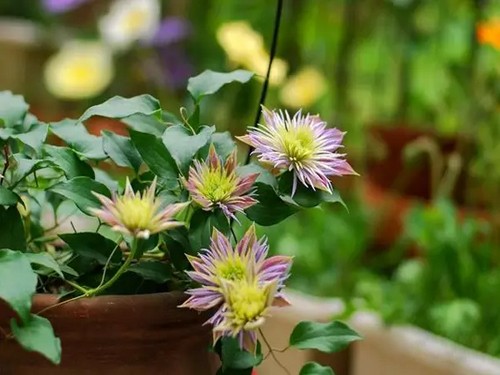
Clematis is a very common ornamental plant, with many flower colors and varieties. It is very suitable for home decoration, and can be planted in courtyards or by windows, or grown in pots as an accent. Below, the editor will share the cultivation methods and precautions for clematis!
[Soil]
It prefers fertile, well-drained alkaline loam, and dislikes waterlogged soil or soil that dries out in summer and cannot retain water. It prefers fertile, well-drained alkaline loam, and dislikes waterlogging. The most important thing is that the potting soil must be breathable. If conditions allow, choose some better soil that has been strictly sterilized; if conditions are poor, use perlite and peat, and try not to directly dig garden soil for potting.
[Watering]
For clematis to grow well, the roots must be ensured smooth breathing, and watering should alternate between wet and dry. The potting soil should be allowed time to dry out; generally, when the soil 2-3 cm below the surface is dry, you can water. If it is a plastic pot, it is a different story: you can judge by the weight of the potting soil, and when it becomes lighter, it is time to water; for a clay pot, observe the potting soil, and when it turns white, it needs watering. When watering, you must water thoroughly; the concept of watering thoroughly means at least water flows out from the bottom of the pot. After watering, pay attention to timely ventilation. It is drought-tolerant and afraid of waterlogging. During the plum rain season, due to high temperature and high humidity, it is prone to disease and death, so during the growing season just keep the potting soil moist, and never water too much, otherwise the roots are prone to rot.
[Light]
Potted clematis should be placed under full-light conditions from autumn to early spring of the following year for cultivation, with no need for shade. After entering summer, strong light will cause the leaves of clematis to age and turn yellow, resulting in poor growth, so appropriate shading is needed. When cared for indoors, at least about 4 hours of sunlight per day must be ensured, otherwise clematis will grow poorly.
[Fertilizing]
It does not have high fertilizer requirements; during the peak growing season, applying liquid fertilizer about once every half month is enough. Persist with light fertilizer and frequent application, and avoid being impatient for quick results. There are many varieties of clematis, and some are not tolerant of fertilizer, such as Clematis macropetala, evergreen clematis, and Clematis montana, which should be given less fertilizer during care. Also, when fertilizing small seedlings, it is best to use only root-promoting and seedling-acclimating fertilizer, and do not apply heavy fertilizer. Winter is the best season for fertilizing clematis; basically, apply once and it lasts for several months!
[Precautions]
1. For newly planted clematis, attention should be paid to sufficient moisture in the first few months, so that the roots have enough moisture to extend.
2. Clematis is a vine plant, and its branches are relatively brittle and easy to break, so pay attention to timely guiding and fixing them.
3. For clematis grown on open-air balconies, pay attention to timely drainage, especially in the rainy season. It can appropriately receive rain, but not excessively; move it indoors at the right time.