How to grow potted Cymbidium faberi? Learn the correct cultivation methods
The placement of Cymbidium faberi is very important, as it directly affects the growth and development of the orchid. Cymbidium faberi is generally placed outdoors in spring, summer and autumn (in summer, placed in a shaded spot outdoors), and kept indoors in winter. Outdoors, it is best to have open space on all sides with moist air. Indoors, there should be plenty of light, preferably facing south. This is beneficial to the growth of Cymbidium faberi. The orchid pot is best placed on a wooden stand or table, not on the ground. Below, the editor will explain the cultivation methods for Cymbidium faberi:
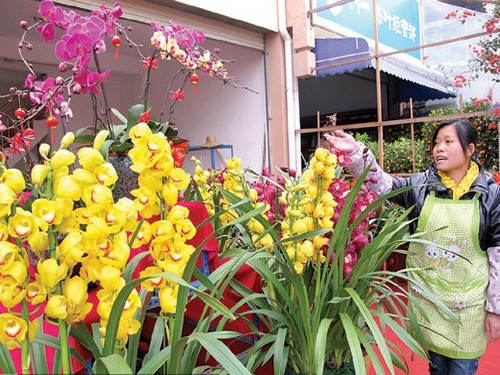
[Light guarantee]
Cymbidium faberi likes light by nature. Except during the high-temperature period of midsummer, it can receive direct sunlight. During high temperatures, about 30% shade should be provided to promote flower formation and prevent the leaves from being scorched by the sun. Light is very important for the growth of Cymbidium faberi. Among Chinese orchids, Cymbidium faberi is the most light-loving orchid. When the summer sunlight is strongest, about 60% shade is needed, and in other seasons no shade is needed.
[Suitable temperature]
Cymbidium faberi originates from low-latitude, high-altitude areas. The suitable growth temperature is 10°C to 25°C. The wintering temperature should not be too high; around 10°C at night is more suitable. In summer, Cymbidium faberi should not exceed 38°C, and in winter it should not be lower than minus 5°C. The reproductive growth temperature is 10-20°C. Among Chinese orchids, Cymbidium faberi is the most cold-resistant and high-temperature-resistant orchid.
[Humidity requirements]
Cymbidium faberi's requirement for air humidity is 60%-75%. During the winter dormancy period, air humidity should not be lower than 50%; during the growth period, humidity should be kept between 70%-80%.
[Watering and moisture retention]
Cymbidium faberi has relatively high water requirements. During the growth period, it must not be too dry. In principle, water when the soil looks dry, and water thoroughly each time. In spring, autumn and winter, water once every three or four days, and as the temperature rises, gradually increase the frequency of watering. In hot summer, water 2 to 3 times a day, and often spray water on the leaves to increase air humidity, so as to avoid yellow leaves.
[Reasonable fertilization]
During the growth period, Cymbidium faberi should be fertilized lightly and frequently. A dilute chemical fertilizer or compound fertilizer can be applied as a top dressing. If more bone meal or decomposed soybean cake fertilizer is applied, the flowers can be larger and more numerous. Liquid fertilizer should be diluted at 1:1000 and applied once every 10 days. Before flowering, sufficient fertilizer should be applied; do not fertilize during the flowering period or in midsummer.
[Greenhouse cultivation]
Cymbidium faberi is generally cultivated in plastic greenhouses or heated greenhouses. In plain areas, cultivation requires a high-mountain base for summering and flower forcing. At present, Yunnan is the main production area of Cymbidium faberi, generally using plastic greenhouses. In winter, heating is needed. When the temperature rises in summer, the plastic film of the greenhouse should be removed and replaced with shade netting.
[Remove buds monthly]
The pseudobulbs of Cymbidium faberi generally contain more than 4 leaf buds. In order not to disperse nutrients, the new small buds and their growth points must be completely removed. Bud removal should be carried out before the new flowering period, removing buds once a month. This can concentrate nutrients, strengthen the mother pseudobulb, and make the flowers bloom larger and more numerous.
[Prevent pests and diseases]
In order to inhibit the occurrence of orchid diseases, in addition to properly controlling the dry and wet conditions of the potting soil at ordinary times, clay pots should also be used as much as possible for flower pots, and glazed pots should be used less. In particular, newly dug orchids from the mountains that grow poorly must be planted in clay pots. Doing so makes the potting soil dry easily, which can promote orchid growth and reduce the disease rate. In addition, sterilization treatment should also be carried out (exposure to the scorching sun is sufficient) to prevent diseases.
Orchids are most prone to southern blight in rainy and high-temperature seasons. It can be prevented by spraying with 800-times diluted Topsin solution or Bordeaux mixture. If the disease is severe, use 500-750 times diluted Topsin and spray once every 7-10 days. Among pests, scale insects occur most frequently. These insects attach to the base of the leaves. If scale insects are found, they should be removed promptly. To avoid scale insect infestation, starting from April, "1059" at 2000-times dilution can be used for control.