How to grow potted Chinese trumpet creeper (Campsis grandiflora) and things to note
Chinese trumpet creeper likes sunny spots but can also grow in shady environments. It likes a warm, humid climate and has low soil requirements: fertile, moist and well-drained soil is enough. Chinese trumpet creeper is drought-tolerant and waterlogging-tolerant, and can also tolerate saline-alkaline soil; its sprouting and reproductive ability is strong.
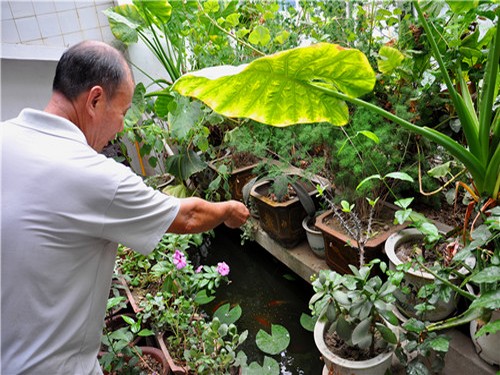
Chinese trumpet creeper is a climbing plant, generally grown in home courtyards, on balconies, windowsills and similar places, and some people choose to grow it in pots. Below, let's learn about how to grow Chinese trumpet creeper:
1. Soil: Chinese trumpet creeper is not demanding about soil and can grow in both sandy loam and clay loam.
2. Temperature: The growing temperature for Chinese trumpet creeper is 10-28°C; in summer the temperature must not exceed 30°C, so cooling measures should be taken in summer. In winter it needs plenty of sunlight, and the growing temperature must not be lower than 5°C, otherwise frost damage will occur, so insulation measures must be taken. Chinese trumpet creeper likes warmth and is not cold-tolerant; in winter it should be placed indoors in a place that does not freeze to overwinter. In addition, whether in winter or summer, attention should be paid to ventilation.
3. Watering: Chinese trumpet creeper likes moisture, so it can be watered once a day, especially during the flowering period; the potting soil should not be too dry, but it should not be too wet either. Water whenever the soil looks dry, and water thoroughly; never allow water to accumulate. In summer, it is better to keep the potting soil on the drier side, but be sure to spray water on the leaves and the ground. During the flowering period of Chinese trumpet creeper, a certain humidity should be maintained; the potting soil should not be too dry, but it should not be too wet either.
4. Fertilizing: Because Chinese trumpet creeper grows fast and blooms many times, during the growing period you should apply light fertilizer frequently, about once every 10 days with thin cake fertilizer or compound fertilizer. During the flowering period, a liquid fertilizer mainly of phosphorus and potassium should also be applied once a month, but stop fertilizing in high-temperature seasons. Before fertilizing, the potting soil should be on the drier side; after fertilizing, spray water once with a fine nozzle to avoid fertilizer water sticking to the leaves and causing rot. Chinese trumpet creeper is managed extensively, and fertilizing once every half month is enough. During the flowering period, to prolong the flowering period, more fertilizer should be applied. Chinese trumpet creeper likes fertilizer and moisture, so after sprouting in spring, water and fertilizer management should be strengthened. Generally, apply liquid fertilizer 1-2 times a month.
5. Pruning: If Chinese trumpet creeper is to be planted with a trellis, in order to promote vigorous growth and abundant flowering, before sprouting in early spring, cut off weak, winter-dried and crowded branches so as to improve ventilation and light penetration, which benefits growth and flowering.
6. Repotting and root pruning: Seedlings that have survived cuttings or have been grown from seed all need to go through several repottings from a small pot to a medium pot to a large pot. The plant needs to be repotted once each year before sprouting in spring or autumn. The growing medium should be fertile, loose and well-drained potting soil; generally, leaf mold plus sandy loam plus fully decomposed organic fertilizer and phosphate fertilizer can be mixed evenly for Chinese trumpet creeper, and no base fertilizer needs to be applied, so as to avoid root rot.
7. Pests and diseases: Compared with other plants, Chinese trumpet creeper has fewer pests and diseases, but attention should still be paid to prevention and control. If it really becomes infected, pesticide should be applied, preferably in a diluted form.
8. Placement: To keep the plant shape of Chinese trumpet creeper full, its position should be changed frequently during the growing period so that the plant receives light evenly, avoiding leaning to one side and ruining the plant shape. However, during the flowering period it should be moved as little as possible, otherwise it will cause bud drop and flower drop. Chinese trumpet creeper has fewer pests and diseases, but timely prevention and control should be noted. During periods of high temperature and high humidity, Chinese trumpet creeper is prone to aphid damage; once found, spray 40% dimethoate 800-~500 times dilution in time for control.
Chinese trumpet creeper is also quite suitable for potted planting to beautify the home environment, but care should be taken to set up a trellis for it to climb. That is all for the introduction to how to grow Chinese trumpet creeper, and I hope it is helpful to everyone.